Altadena and Octavia Have Lessons for Us
By Hooshyar Afsar
Introduction
Writing about the Los Angeles fires in the last issue of Peyk and, more specifically, the Eaton fires that devastated the historic Altadena neighborhood, took me on a journey of history, culture, and literature that inspired me to write this piece. [1] While Altadena was home to several Black cultural and political figures, the one who stood out most is Octavia Butler, the renowned, award winning, late science fiction writer.
Altadena: More Than A Residential Refuge For the Black Community
One of the major aspects of racial discrimination in the United States is housing discrimination, which has significantly contributed to the wide disparity between the average wealth of a Black family when compared to a white family. According to federal statistics before the COVID-19 epidemic, the average wealth of a Black family in the United States is only 10% of the average wealth of a white family. [2] Buying a house is the most significant investment and the most effective tool for accumulating wealth for the absolute majority of Americans. That is yet another reason why housing discrimination has played a key role in depriving Black Americans and other communities of color from accumulating and maintaining generational wealth.
The term “redlining” emerged as the main indicator of housing discrimination, in which “Black neighborhoods” were literally colored red on real estate maps, signifying them as unsafe for investment by mortgage bankers. During the 1960s and 1970s, Altadena was a place where Black families had a chance to get a mortgage, buy a home, and build generational wealth. It soon became a cultural refuge for the Black community in Los Angeles, harboring artists, writers, political activists, and more. [3] Octavia Butler is one of those cultural icons whose name is also tied to the history of Altadena.
Octavia Butler: A New Kind of Science Fiction Writer
Butler was born in Pasadena, California in 1947, and grew up there just south of Altadena. Her father died when she was only seven and she was thereafter raised by her mother and grandmother in a religious Baptist environment. Butler’s mother cleaned houses for white people and little Octavia accompanied her and helped her out. She was exposed to the outright racism that her mother was subjected to by the white employers, such as being required to enter through the back door of the homes she cleaned. While California was not an outright segregated state like the Jim Crow south, there was de facto segregation in place and many Black people who migrated from the segregated states in search of a better life ironically called the de facto order “James Crow.”
Butler was taller than all her classmates, yet she was not good at sports and found refuge in reading books. She was often bullied as “weird” because she was introverted and loved reading. In her own words, she was the “perennial out-kid.” [4] Then came her avid interest in science fiction, a field that was then dominated by white male writers. She decided that she would become the first Black woman science fiction writer. While working odd jobs to support her dream and resisting her mother’s pressure to become an office secretary, she persevered and wrote a series of science fiction stories that finally allowed her to live off her writing. The novel that became her breakthrough was Kindred, published in 1979, regarded as her most popular and best-selling work.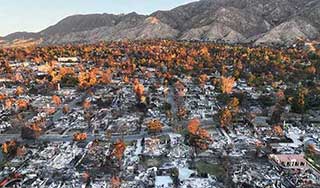
Kindred: Science Fiction or a Fantasy?
Kindred follows the journey of a young Black woman writer, namely Dana Franklin, who is married to a white man, also a writer. [6] They have just earned enough money to be able to afford a house in Altadena, but in the first week of their move, Dana is mysteriously taken back to an 1811 plantation on the Eastern Shore area of Maryland when and where her enslaved and enslaver ancestors live. The time travel between the two centuries and locations keeps happening from June 9, Dana’s birthday, to July 4, 1976, the bicentennial of the United States’ Declaration of Independence, although the time duration spent in the book mostly focuses on the nineteenth century. Dana, the main character, is caught in a dilemma of saving her white slaveholder ancestor in multiple time travels when and where he is facing death and, on one occasion, saving her free Black great-great-great-grandmother who is later re-enslaved.
While Butler is known as a science fiction writer, in a 1990 interview she said that Kindred is a fantasy and there is no science in it. [5] Although she does not attempt to give any scientific explanation of the time travel, Butler uses the travel back to antebellum Maryland to put the reader in close contact with the horrors of slavery. While she said in the same interview that she took precautions in terms of presenting all the violence and horrors of slavery to make sure she reaches her readers, she makes successful attempts to move away from the sanitized view that the films, television, and mainstream media of the late 1970s and early 1980s gave of chattel slavery. By taking a late twentieth century Black woman through the vivid and terrifying experience of a nineteenth century enslaved woman, Butler succeeds in engaging the reader with the horrors of slavery.
During Dana’s final journey back to the twentieth century on the bicentennial of the United States, she loses her arm. Here is what Butler said about that: “I couldn’t really let her come all the way back … I couldn’t let her come back whole and that, I think, really symbolizes her not coming back whole. Antebellum slavery didn’t leave people quite whole.” [5] The writer reminds us that we have not reckoned with the social trauma of 250 years of enslavement (and over 80 years of segregation and lynching terror after that). Perhaps that message has more merit today when Diversity, Equity, and Inclusion are under attack.
The Parable Series: A Genius in Seeing The Trends to Come
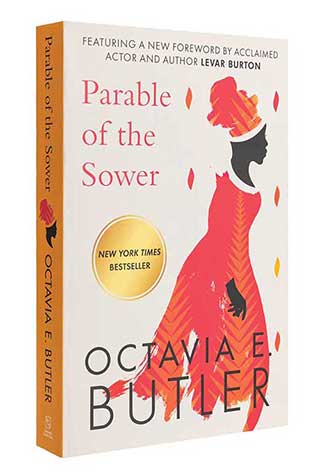
Later in 1993 and 1998, Butler published her two Parable books, namely Parable of the Sower and Parable of the Talents. [7, 8] The main character of the series, Lauren Olamina, is a young Black woman who is a “sharer,” meaning that she can feel the pain and pleasure of others when they are nearby. Parable of the Sower starts on Lauren’s 15th birthday in Robledo, a fictional Los Angeles suburb that resembles a dim future of Altadena. Written in 1993, the story starts in 2024, when fires caused by climate change, the rise of poverty, and the disintegration of social order have created a dystopian America. Experiencing a violent series of events, Lauren—who had prepared for such calamity with a wisdom beyond her age—starts her tumultuous life journey. The main character of the series faces a fictional extremist Christian movement led by a U.S. president with the slogan “Make America Great Again,” who installs an authoritarian government that brings back new kinds of enslavement by corporations and religious cults. Lauren embarks on a fascinating and immensely tragic journey to survive and thrive by creating the “Earthseed” community in twenty-first century California and America. The community she creates is diverse along the intersectionality of race, gender, sexuality, and ethnic origin.
In an essay she wrote in conjunction with the 2001 UN-sponsored World Conference on racism, Butler—referring to the Parable series—wrote: “Several years ago, when I was about to start a novel, I thought I might get some mileage out of the idea of a civilization in which people somehow felt — that is, they shared — all the pain and all the pleasure they caused one another. … The point was to create, in fiction at least, a tolerant, peaceful civilization — a world in which people were inclined either to accept one another’s differences or at least to behave as though they accepted them since any act of resentment they commit would be punished immediately, personally, inevitably. Eventually, though, I chose not to write about such an empathic society. I wrote instead about a single empathic woman who suffered from the delusion that she shared other people’s pleasure and pain. She was not a particularly peaceful woman, but she did have to consider the consequences of her behavior more than other undeluded people had to. After all, delusional pain hurts just as much as pain from actual trauma.” [4]
Lessons for Our Community
In the same 2001 essay on racism, Butler writes: “Several years ago I wrote a novel called Dawn in which extra-solar aliens arrive, look us over, and inform us that we have a pair of characteristics that together constitute a fatal flaw. We are, they admit, intelligent, and that’s fine. But we are also hierarchical, and our hierarchical tendencies are older and all too often, they drive our intelligence—that is, they drive us to use our intelligence to try to dominate one another … More fiction? Maybe … But whatever is the source of our intolerance, what can we do about it? What can we do to improve ourselves? Of course, we can resist acting on our nastier hierarchical tendencies. Most of us do that most of the time already. And we can make a greater effort to teach children to resist their hierarchical impulses and beliefs and to channel what they can’t resist into sports and careers … Will this work? Well, it hasn’t so far. Too many people will not, perhaps cannot, do it. There is, unfortunately, satisfaction to be enjoyed in feeling superior to other people … Amid all this, does tolerance have a chance? Only if we want it to. Only when we want it to. Tolerance, like any aspect of peace, is forever a work in progress, never completed, and, if we’re as intelligent as we like to think we are, never abandoned.” [4]
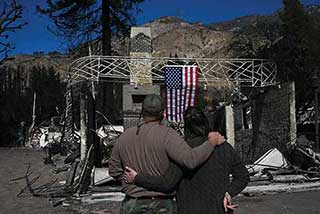
In these uncertain and troubling times, our community in the U.S., Iran, and worldwide is affected and worrisome of what is to come. The lessons of the Altadena fire and Butler’s writings, while tragic, are hopeful. Both of them remind us of the Persian mythical bird Phoenix, who rises back to life from its own ashes. Just like the Phoenix, our community alongside all other human communities, can and should be hopeful of a future for the planet free of “the kind of hierarchical behavior that can lead to racism, sexism, ethnocentrism, classism, and all the other ‘isms’ that cause so much suffering in the world.” [4]
References:
[1] – https://peykmagazine.com/en/2025/03/04/the-los-angeles-fires/
[2] – https://www.census.gov/library/stories/2024/04/wealth-by-race.html
[3] – https://www.theguardian.com/us-news/2025/jan/18/altadena-fire-black-families#:~:text=Altadena%2C%20a%20quiet%2C%20tight%2D,homes%20elsewhere%20in%20the%20state
[4] – https://www.npr.org/2001/08/20/5245679/on-racism
[5]-https://speculativefictions.web.unc.edu/wp-content/uploads/sites/9624/2016/01/InterviewOctaviaButler.pdf
[6] – Butler, Octavia, Kindred, Boston: Beacon, 1979.
[7] – Butler, Octavia, Parable of the Sower, New York: Grand Central Publishing, 1993.
[8] – Butler, Octavia, Parable of the Talents, New York: Grand Central Publishing, 1998.