ISSD Alumni Corner
The Iranian School of San Diego boasts a significant history, having been in operation since 1988, and has positively impacted numerous students and families over the years. The school takes pride in its extensive alumni network, consisting of successful individuals who have made notable contributions to both the Iranian American and global communities. Many alumni now have children enrolled at ISSD, establishing a strong multi-generational bond with the school. In an effort to showcase these accomplishments and underline the value of ISSD, Peyk is highlighting profiles detailing the lives and experiences of the school’s graduates. We are reaching out to select ISSD alumni with a series of questions to not only check on their well-being, but also to introduce them to current students and parents. These alumni could potentially serve as significant role models for the present and upcoming student body. Our guest in this issue is Alexandre Shadyab.
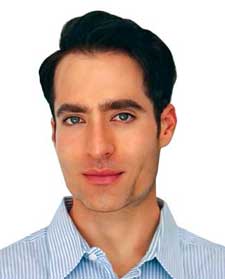 Alexandre Shadyab
1. During which years did you attend ISSD, and for how long?
I attended ISSD for five years from 1996-2001.
2. Can you share any fond memories or amusing anecdotes from your time at ISSD?
One of my favorite memories was working on Zang-e Tafri, our student paper. We handwrote everything (yes, with actual pens) and added our own illustrations. I even wrote a music review for the album Aab, Atash o Khaak by Silhouettt. (Still have it in my playlist, by the way! That album never gets old.)
I also joined the school’s dance group and performed at the Nowruz celebration. That experience sparked my lifelong love for Iranian traditional dance. Those moves have stayed with me all these years and I’m notorious for dominating the dance floor at every mehmooni. Let’s just say, when the music starts, the dance floor gets nervous.
3. Are you still in contact with fellow students, teachers, or staff from ISSD?
During my time at ISSD, I had the unique experience of attending school alongside my brother, Aladdin, and my cousins, Taraneh and Marjaneh. Although they started a couple of years before I did, by my final year, we all ended up in the same class, which made weekends feel like an extended family gathering. Later on, my younger cousin, Ardeshir, also briefly joined the school, continuing our family’s connection to ISSD across generations.
While I’m no longer in touch with most of my classmates, I still cherish those shared memories. And every now and then, I run into Khanum-e Estakhri and Aghaye-e Sadr, which always brings back a wave of nostalgia and appreciation for the teachers and staff who helped shape our experience.
4. How has your education at ISSD influenced your relationship with your extended family and cultural heritage?
Growing up in the U.S. and never having visited Iran, ISSD gave me something invaluable: a connection to my heritage. Learning to speak, read, and write in Farsi has opened up a world of cultural connection. Through social media, I’ve had meaningful exchanges with Iranians from all over the globe, even in Iran. Despite our different geographical backgrounds, we share a common language and culture that transcends borders, and I’m deeply grateful for that bond. This connection has been invaluable, especially when navigating my identity as an Iranian American.
5. What are your current endeavors in terms of career, family life, and volunteering?
I received my Bachelor of Science in Information Systems and later earned my MBA from San Diego State University, completing both between 2006 and 2012.
Since 2019, I’ve been working in marketing and communications at UC San Diego, where I support an Alzheimer’s research group. My primary focus is participant recruitment for our clinical studies. I feel fortunate to contribute to research that has a real impact on individuals and families facing this disease.
As for what’s next, I’m still figuring that out. I’m open to where life takes me. I’ve been focused on building a meaningful career, staying connected with loved ones, and just living in the moment. At this stage, I’m focused on steady progress by investing in work that matters, nurturing relationships that sustain me, and pursuing goals that continue to evolve.
6. What are your aspirations for the future of ISSD, and what advice would you offer to families with children currently at ISSD or considering enrollment in the future?
I hope to see ISSD continue to grow and thrive with more students in the years to come. For second-generation Iranian Americans like myself, learning Farsi is such an important part of building a meaningful connection to our culture, especially for those of us who haven’t had the chance to visit Iran.
It’s not always easy balancing weekday school with weekend language classes, and I know firsthand how much of a commitment it can be. But the effort is absolutely worth it. The ability to speak, read, and write in Farsi becomes a lifelong gift, and students will appreciate that investment more and more as they grow older. It’s something that connects us not only to our heritage, but also to a global community.
7. Is there anything else you would like to add?
Just that I’m incredibly grateful to have been part of the ISSD community. The experiences I had there, whether through language, dance, or cultural traditions, have stayed with me and shaped how I see myself in the world. What started as weekend classes became a lifelong connection to my heritage and culture.
If anyone from our community would like to connect or collaborate professionally or personally, please find me on LinkedIn. I’m always open to reconnecting with fellow alumni, sharing experiences, or exploring new opportunities together.