
Qalat: Ancestral Landscapes and Heritage
By Vahid Jahandari
 Roots and Memory
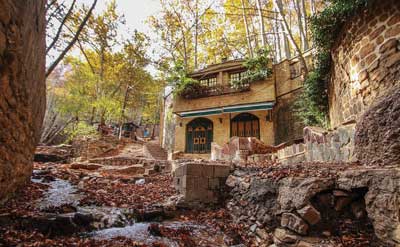
For this edition of Peyk, I turn to a place that is not only a subject of historical and cultural inquiry but also the geographic and emotional origin of my own family heritage. Qalat is a village with roots extending back millennia, and a widely visited destination located in the Derak Rural District of the Central District of Shiraz County, Fars Province, Iran. Situated about 10 kilometers northwest of Shiraz in a foothill area, the village lies beside a scenic spring and is surrounded by dense trees and lush gardens.
Qalat is the ancestral homeland of both my maternal and paternal lineages, whose members were born and raised there over successive generations. Although my siblings and I were born and brought up in Shiraz, our extended family has maintained deep and continuous ties to Qalat, reinforced by its close proximity to the city and enduring patterns of kinship, tradition, and cultural transmission. Drawing on this inherited connection, the present article aims to provide an introduction to Qalat—its history, customs, landscapes, and living culture—while illustrating how this village, which has been registered on Iran’s National Heritage List as well as UNESCO’s World Heritage List, has come into its own as a distinctive site that continues to attract both domestic and international visitors.
 Mountains, Springs, and Stories
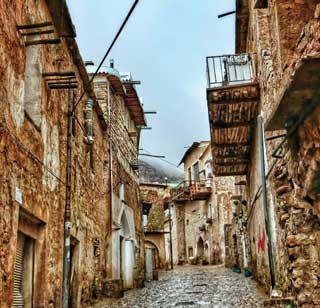
Renowned for its verdant landscapes, mountain springs emerging from the heart of the mountains, deep valleys, ancient trees thousands of years old, and a mild, pleasant climate, Qalat exhibits a compact mountainous settlement pattern, with houses primarily constructed from stone, gypsum, and wood. The people of Qalat maintain a semi-traditional way of life today, historically engaging in agriculture, animal husbandry, and horticulture, with some also participating in trade and the traditional craft of giveh weaving (a type of handmade shoe). The local dialect spoken in the village is a remnant of Southwestern Middle Persian. According to national census data, Qalat has experienced sustained population growth, becoming a populous village within its rural district.
This demographic expansion has coincided with intensifying domestic and foreign tourist flows, which local residents estimate at hundreds of thousands annually. On weekends in particular, the village becomes a focal site of social gathering, attracting large numbers of visitors—among whom younger generations are prominent—whose presence has reshaped Qalat’s built environment and social life. The proliferation of restaurants, gardens, cafés, and residential venues reflects this transformation, as these spaces increasingly function as sites for leisure, collective celebration, ceremonies, and other forms of communal sociality.
Among Qalat’s notable historical monuments is the Church of the Glory of Christ, a Qajar-period building surrounded by gardens, originally established by religious missionaries between the First and Second World Wars. Another surviving historical structure is an old bathhouse, which community members believe was used by the poet Saʿdi (1210–1291 AD), but it is currently on the verge of collapse. Beyond its immediate local significance, Qalat occupies a distinctive position within the broader landscape of Shiraz, a region recognized as one of Iran’s principal tourism hubs, even as most visitors to Shiraz concentrate on well-known landmarks such as the tombs of Hafez and Saʿdi, Eram Garden, Karim Khan Citadel, and Persepolis.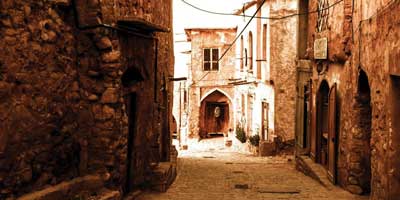
Nature, Tradition, and Spirit
At approximately 2,065 meters above sea level, the village is known for its exceptional tranquility and cool, temperate climate, with little heat even in the hottest months. Its natural features—including cascading springs, cool valleys, waterfalls over rocky formations, and streams through narrow alleys—are most apparent only upon approaching the settlement. Having lived in California—in La Jolla and Santa Cruz—during my doctoral studies within the UC system (2020–2024), I found that my visits to Qalat over the past year since returning to Iran evoked a striking sense of familiarity: the weather, temperate air, towering trees, and fertile soil all vividly reminded me of those coastal landscapes, reinforcing my sense of connection to the village’s environment and atmosphere.
Qalat also encompasses a range of additional historical and natural features not limited to its better-known monuments. These include traditional watermills and the remains of Qezel Arslan Castle, which are among the village’s important archaeological attractions. The surrounding landscape supports diverse vegetation, including medicinal plants such as yarrow, thyme, marshmallow, savory, and pennyroyal along the banks of local waterways like Shab Shotori and the Anjiri Spring. The village’s historical continuity is further suggested by its enduring settlement patterns.
Cultural life in Qalat is marked by strong communal traditions and seasonal ceremonies held during occasions such as Nowruz and Chaharshanbehsoori. Traditional clothing, particularly Qashqai tribal attire, is commonly worn during weddings, which are accompanied by regional music and local performance practices. Among these is Vashang, and/or Vasunak, a form of vocal polyphony performed during wedding ceremonies. Common musical instruments include the tombak (drum), violin, dohol, and sorna. Local cuisine features a variety of traditional dishes, while agricultural and dairy products—alongside seasonal fruits—form an important part of everyday life. Together, these elements confirm Qalat as both a place of natural beauty and a living cultural landscape shaped by long habitation.
Identity and Cultural Ethos
My extensive inquiry, including oral histories and conversations with members of notable families, revealed a consistent narrative regarding the identity of the village’s people. These accounts strongly refute simplistic ethnic classifications. The inhabitants of Qalat were neither Turkic nor Luri, nor could they be neatly subsumed under other dominant regional ethnic labels. Rather, they were understood as original in their own right: a community with a distinct historical continuity, social character, and cultural self-definition that predates and transcends such categorizations.
This distinctiveness was expressed most clearly through the dialect of Qalat which, while sharing affinities with broader Persian linguistic structures, possesses its own phonetic patterns, vocabulary, and idiomatic expressions. Elders consistently emphasize that this way of speaking was neither borrowed nor imposed, but organically shaped by the village’s geography and long-standing patterns of social interaction. The dialect thus functions not merely as a means of communication, but as a living archive of collective memory and identity.
Equally significant was the community’s commitment to knowledge, literacy, and education. Long before the establishment of modern state schools, Qalat maintained traditional maktabs—local centers of learning where children were taught reading, writing, religious texts, and ethical instruction. Families across generations regarded education not as a luxury, but as a responsibility and a marker of social dignity. This emphasis on learning fostered a culture in which intellectual curiosity was deeply valued.
Hospitality also emerged as a defining cultural principle. Qalat’s residents are widely known for their generosity toward travelers and, in particular, for their warm and sustained relationships with migrating nomadic tribes. These interactions were not fleeting or purely transactional, but they involved social ties, mutual trust, and economic exchange. Trade in agricultural goods, livestock products, and seasonal resources created a network of interdependence that benefited both settled villagers and nomadic groups, reinforcing Qalat’s role as a connective node between sedentary and mobile ways of life.
Religious Pluralism
Another defining feature highlighted repeatedly in testimonies was Qalat’s time-honored tradition of religious coexistence. Over successive generations, people of different Abrahamic and monotheistic faiths—namely Muslims, Christians, and Kalimis—lived side by side within the village, not as segregated communities, but as interwoven participants in a shared social fabric. This pluralism was not experienced as an exception or a source of tension; rather, it formed an ordinary and accepted dimension of everyday life.
The term Kalimi, used to refer to Jewish inhabitants, carries a distinctly Iranian historical and linguistic lineage. I was more specifically informed that they were also referred to as mūsaviyān, literally meaning “the people of Moses.” Rooted in the Quranic expression describing God’s direct speech with Moses, the designation emphasizes descent from the followers of Moses, underscoring the Abrahamic continuity shared with Islam and Christianity. In Qalat, Kalimis were recognized not as outsiders, but as integral members of the community—Iranian by culture, language, and social belonging, as well as Jewish by faith. Their presence was understood within a framework of shared spirituality rather than doctrinal difference.
This ethos of coexistence extended well beyond religious tolerance into the practical and intimate domains of life. Economic relations were deeply intertwined: Kalimi families were often engaged in trade and commerce, while Muslim villagers were known for craftsmanship and production, particularly in shoemaking, the weaving of giveh, and the production of grape-based goods such as grape molasses. These products were actively traded with Shiraz, embedding Qalat within wider commercial networks. Financial dealings were conducted in a manner that, according to elders, avoided disputes or communal conflict.
Interfaith Bonds
Remarkably, social boundaries were also porous at the level of kinship. Despite differences in religious affiliation, intermarriage frequently occurred, reflecting a social environment in which shared values, ethics, and mutual respect often outweighed confessional distinctions. Such unions were remembered not as transgressions, but as natural extensions of neighborly relations in a small, closely knit village.
Cultural life further reinforced this cohesion. Qalat was widely regarded as possessing a strong literary sensibility. Poetry, verse recitation, and storytelling were not confined to elites or formal settings; they circulated among ordinary people, shaping everyday speech and social interaction. This shared appreciation for language and poetic expression transcended religious lines, offering another common ground through which collective identity was articulated.
Taken together, these narratives portray Qalat as a microcosm of Iranian pluralism: a village where different faiths, united by shared ancestry, ethics, and attachment to place, forged a communal life marked by cooperation, interdependence, and cultural richness. This lived harmony, sustained over generations, stands as one of the village’s most enduring—and least documented—forms of heritage.
Rhythms of Village Life
Qalat emerges as a village defined by a rich interplay of tradition, culture, and enduring social cohesion. Its people have long been recognized for their industriousness, intellectual openness, and appreciation for literature and poetry—from the works of Hafez and Saʿdi to the Shahnameh. Agricultural livelihoods, particularly viticulture, dairy, and livestock, shaped both daily life and trade, with the village’s renowned wines historically reaching distant regions. Traditional knowledge extended into medicine and herbal remedies, while water management and irrigation reflected sophisticated environmental awareness.
Cultural life thrived through music, dance, and communal gatherings, with local forms of singing and folklore performed at weddings and social events, nurturing joy and shared identity. Families valued respect, cleanliness, and cohesion, maintaining low divorce rates and strong intergenerational ties. Even as migration and industrial change reduced the local workforce, the rhythms of village life—from climbing mountains to crafting artisanal goods—continued to shape a community deeply rooted in heritage, yet vibrant, adaptable, and socially intertwined. Qalat stands as a testament to the enduring strength of cultural memory, local knowledge, and human connection, offering a model of rural life where tradition, creativity, and communal bonds flourish across generations.