The Sounding Iran Conference: An Unprecedented Gathering on Music and Society
Hannaneh Akbarpour
Music, at first glance, may be seen as a largely neutral art form associated with beauty, pleasure, and emotional expression. However, it is increasingly understood to be far from neutral, functioning instead as a site of critical expression and engagement with broader social concerns. This may partly account for the large number of researchers who engage with Iran’s cultural and social nuances through their work on music. The University of California, Irvine, ecently hosted a large number of these scholars, musicians, and educators who gathered to share and discuss their work on music in Iran and the Iranian diaspora at the conference Sounding Iran: Musical Pasts, Presents and Futures.
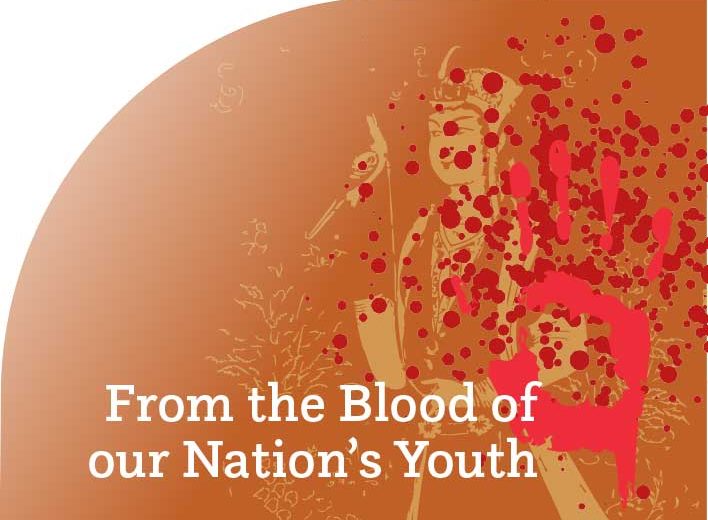
Held on February 7 and 8, 2026, the conference provided an unprecedented venue in which more than 50 scholars, musicians, and performers presented their artwork and research. While bringing together so many scholars outside Iran for a conference dedicated to its music was a significant accomplishment and a moment of celebration for the artistic and scholarly community, the atmosphere of the conference was nevertheless deeply influenced by the recent wave of violent turmoil in Iran. This was reflected most immediately in the conference poster, which was designed with swirling, blood-red curves, in tribute to the many lives recently lost amid the devastating turbulence. Despite this situation, artists gathered during this charged moment to affirm their strong belief in the importance of critical discourse and shared interaction in imagining better futures for the country.
The conference was co-chaired by Professor Hossein Omoumi, a renowned musician and Professor of Persian Performing Arts at the University of California, Irvine; Payam Yousefi (Assistant Professor of Ethnomusicology, University of Florida), and Hesam Abedini (Assistant Professor of Composition, California State University, Fullerton). As articulated in the conference statement, Sounding Iran: Musical Pasts, Presents, and Futures set out “to gather a latent potential in our field among a swiftly growing cohort of scholars and artists—an unprecedented number of thinkers and creatives in academia whose work centers music and sound in Iran.” The keynote, delivered by Houchang Chehabi, Professor Emeritus at Boston University, was one of the highlights of the conference. In his keynote speech, Professor Chehabi traced the long history of music prohibitions across cultures and religious contexts, building on this to offer a nuanced understanding of the implications of present-day restrictions on music and women’s voices.
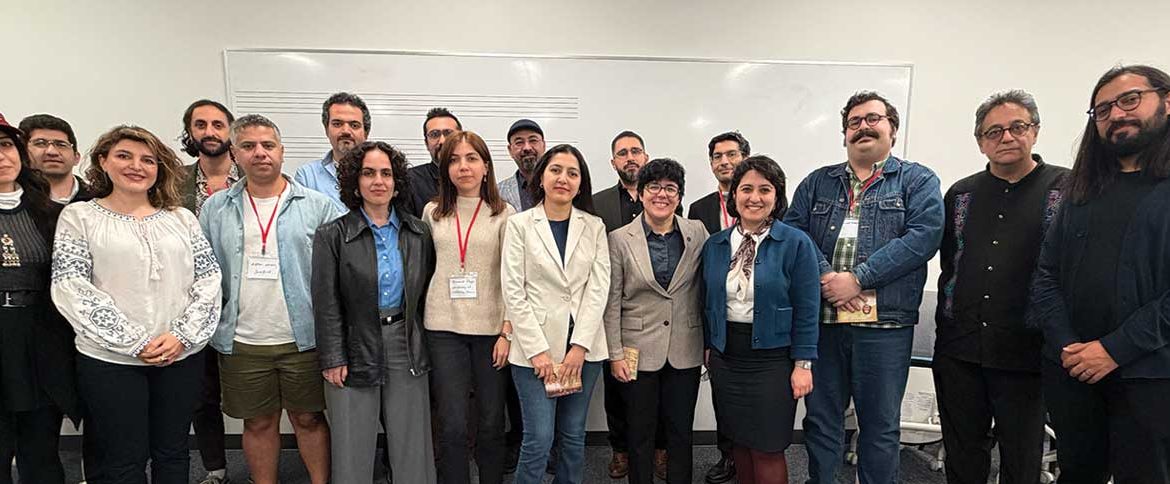
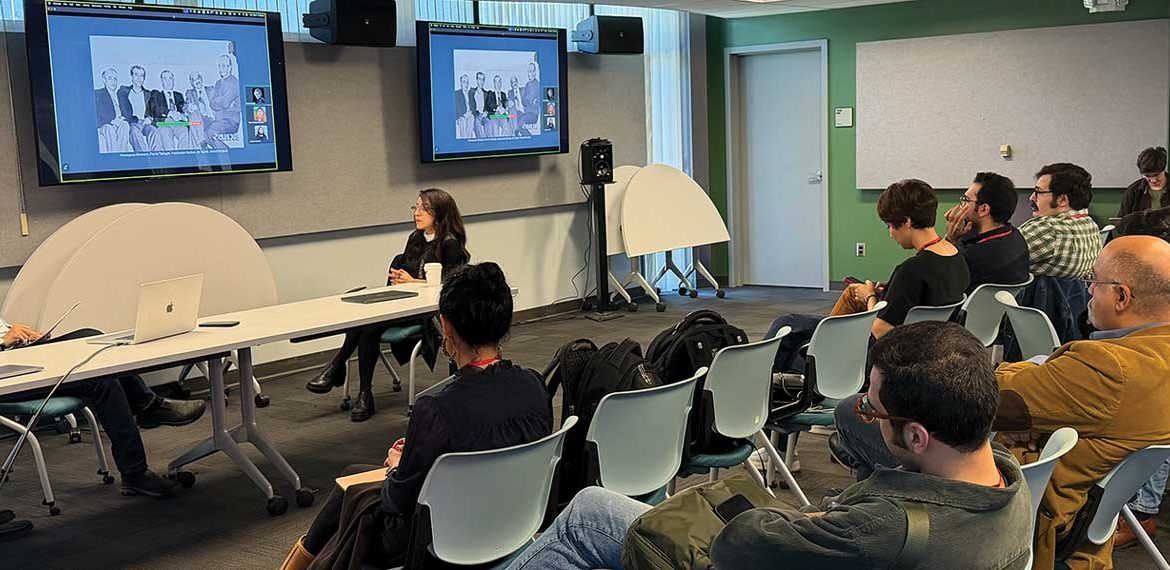
The conference covered a remarkably wide range of themes, with more than 35 presenters participating in 13 panels on topics such as politics and sound, music and visual media, Jewish music in 20th-century Iran, women and voice, race and gender in music and dance, pedagogy and new approaches to classical Persian music, music and modernity, and identity and resistance. As reflected in the panel themes, most presentations situated music within Iran’s social and political realities rather than treating it as an isolated object of study. Among the many examples were Armaghan Fakhraeirad, a PhD candidate at the University of Pennsylvania, who examined the history of Black slavery in southern Iran and its entanglement with musical practices; Dr. Azadeh Vatanpour, a scholar of Religious Studies who explored how Yārsān musical practices function not only as spiritual conduit, but also as a means of sociopolitical resistance; and Dr. Behzad Namazi, an ethnomusicologist and composer, who discussed how music serves as a vital means of maintaining cultural identity for the Iranian diaspora in Los Angeles.
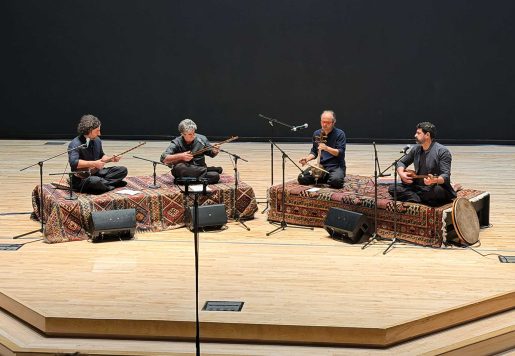
The two days of the conference concluded with two remarkable concerts that drew a large audience from both UC Irvine and the Iranian community in Southern California. The first evening was dedicated to the thousands of protesters who recently lost their lives in Iran and featured moving musical and visual performances that evoked a deep sense of connection to the current moment in the country, offering the audience a space for collective mourning and reflection grounded in care and hope.
In one of the pieces, a performance of kamancheh (the bowed Iranian traditional instrument) and vocals by Payam Yousefi and piano by Hesam Abedini brought Houshang Ebtehaj’s well-known poem Bahār-e Gham-Angīz (Sorrowful Spring) to life in the concert hall. Performed in Avāz-e Isfahān, the poem resonated with the grieving hearts of the audience, as its verses resonated through the hall in Payam’s warm and somber voice:
Bahār āmad, gol o nasrīn nayāvard
Nasīmī bū-ye Farvardīn nayāvard
Che oftād īn golestān rā, che oftād?
Ke āyīn-e bahārān raftash az yād
Cherā khun mī-chakad az shākhe-ye gol?
Che pīsh āmad? Kojā shod bāng-e bolbol?
Che dard ast in? Che dard ast in? Che dard ast?
Ke dar golzār-e mā in fetne kardast?
Spring came, but it brought no roses or wild blossoms,
No breeze arrived with the scent of Farvardin.
What has happened to this garden—what has happened?
Has it forgotten the ways of the spring?
Why does blood drip from the branch of the rose?
What has happened? Where has the nightingale’s song gone?
What pain is this? What pain is this? What pain is this?
That has sown such turmoil in our garden?
The second night’s concert featured a powerful performance by the celebrated Maestro Ali Akbar Moradi and his ensemble. According to Maestro Moradi’s pre-concert note, the program—originally intended to feature more celebratory pieces—was retitled Lamentations and Dance upon the Children of Kaveh Ahangar, resonating with the ongoing situation in Iran. The performance included selections from the Kurdish Shahnameh, performed by Maestro Moradi and accompanied by the tanbour, kamancheh, and daf—three instruments closely associated with Kurdish musical culture.
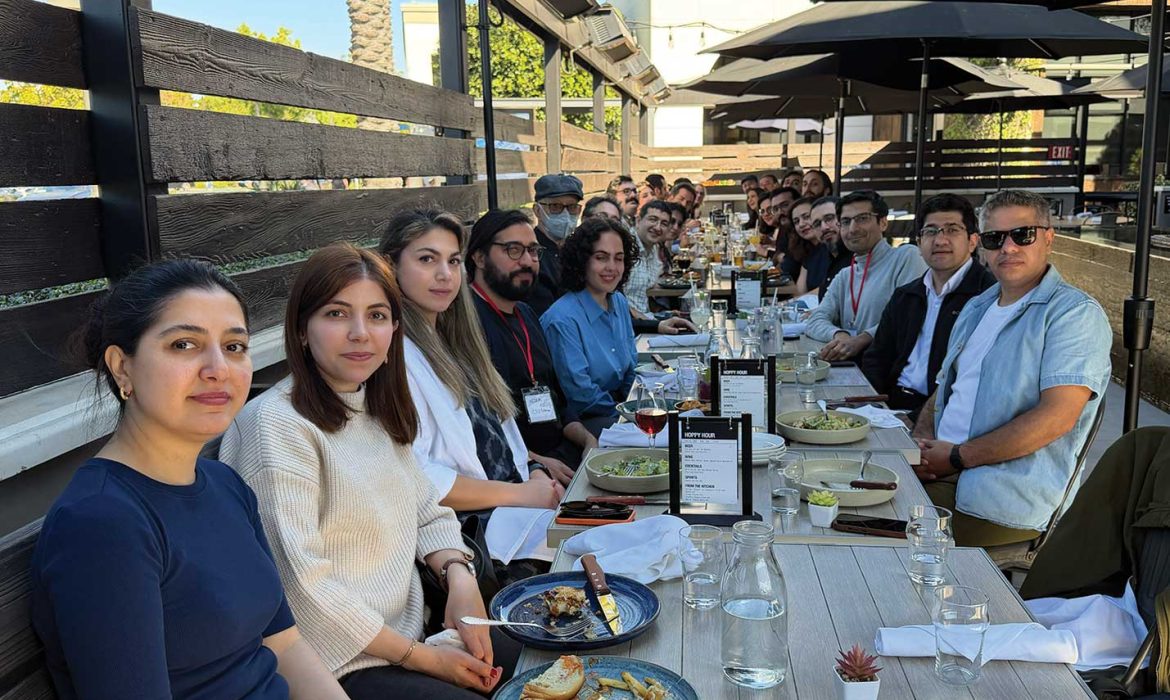
Despite the gravity of this dark moment, the conference took place thanks to the dedication of all of its participants and the organizers, especially Professor Hossein Omoumi, who, according to the two other chairs, was at the heart of this event. However, the online portion—intended primarily to include scholars based in Iran despite travel restrictions—was ultimately postponed due to these circumstances, to be held at a time of greater peace and stability.
Hannaneh Akbarpour is a PhD student at Yale