
Are We Paying Attention?
Ali Sadr
Addressing current affairs, particularly their impact on the Iranian American community, may not seem like the best course of action at this time. However, there are three significant issues that remain largely overlooked and have been sidelined from public discourse. These topics are not only crucial for the well-being of specific nations, but also threaten the entire human race and life on our planet. They are human-made and preventable catastrophes: global warming, health pandemics, and nuclear contamination and warfare.
Currently, the public and media in this country are overwhelmed by chaotic policies surrounding wars, immigration, tariffs, mass layoffs, and inflation, leaving little room for a broader perspective. While nuclear disasters and pandemics may not be directly impacting our lives at this moment, the effects of global warming and environmental disasters are felt daily by people worldwide.
***** ***** *****
We have all witnessed the recent wildfires in Los Angeles, and the fear and anxiety we experienced during those days still linger. Some areas in Los Angeles burned so severely that they evoke memories of Hiroshima and Gaza. Several hundred blocks were destroyed in just a few hours. This disaster was not an “act of God” like an earthquake; it was a very human-made catastrophe!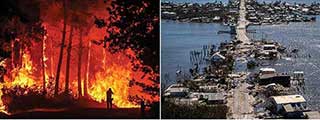
In the past decade or so, we have all observed that the Earth’s temperature has risen each year compared to the previous one. The year 2024 was the hottest year in recorded history, and the year prior to that was similarly warm. The number and intensity of storms, floods, and droughts have reached unprecedented levels. We experienced several years of relatively high rainfall in Southern California, followed by eight months without a single drop of rain! Then came the infamous “Santa Ana winds,” which, with incredible force, were just waiting for a spark—and when it came, we saw the devastating results.
Despite all the evidence, oil companies continue their extraction practices as usual, and no one can stop them or the countries producing fossil fuels. However, environmental organizations and some countries are actively working to exert pressure on greenhouse gas-producing nations. Several global conferences alongside the United Nations have been held in hopes of reducing fossil fuel consumption and preventing further global warming from reaching irreversible levels. One of the most significant global gatherings was the Paris Agreement, held in 2016, which 197 UN member countries joined. Attention should be drawn to countries that have not yet joined: Iran, Libya, and Yemen, along with the United States, which has recently withdrawn (again). Here, I do not intend to delve into this agreement, its goals, or why certain countries—particularly Iran and the U.S.—are absent from it. My aim is to highlight what kind of future we will leave for the world and its inhabitants, especially for our children. Individual actions to preserve the environment are commendable, but they are far from sufficient. It is governments and leaders who can have a significant impact by implementing laws, restricting fossil fuel use, and developing clean energy. Unfortunately, by electing leaders who not only fail to take action for environmental preservation, but actively encourage increased production from oil companies, we exacerbate this crisis, mocking both ourselves and future generations.

Recently, I read a report on the unprecedented rise in depression among high school students. Research shows that one of the primary reasons for this is the sense of hopelessness and powerlessness regarding environmental concerns and an uncertain future. This report was prepared last year, and I am sure the recent elections and the regressive and reactionary views of the new ruling body have intensified these feelings. Some students have expressed, “Why bother studying? We have no future.” Others criticized their parents’ generation, noting that despite scientists issuing warnings for decades and clear evidence of climate change and severe weather fluctuations, they have not only failed to act, but have also supported those who hasten the impending catastrophe.
Governments come and go; some are good, and others are not so favorable. Policies and even wars come and go. The only phenomenon that concerns all people of a nation—whether they support this party or that one, or none at all—extending beyond that to all people worldwide, from Africa to Greenland and from China to Antarctica, is the environment. Its degradation leads not only humanity to the brink of destruction, but all living beings as well. These leaders deny humanity’s role in environmental destruction. Pursuing destructive policies only serves their short-term interests. They unfortunately look only to their immediate needs and are dragging the world toward annihilation.
The greatest service we can offer to future generations is to leave them a livable environment. Let us come together this beautiful spring to advance this crucial goal, showing that we understand their concerns and fears. By pressuring politicians and decision makers, we can compel them to prioritize the preservation and improvement of our environment.