
How Sound Shapes Human Connection from the Womb to Adulthood
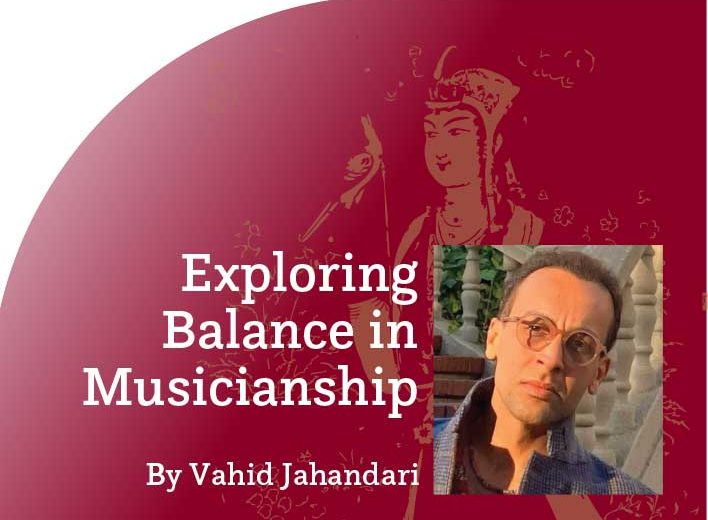
By Vahid Jahandari
 Introduction
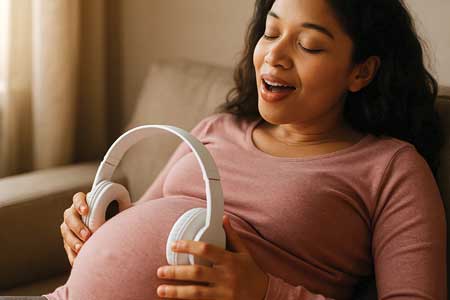
From the earliest moments of existence, long before birth, human life is enveloped in sound. Within the womb, the developing fetus is immersed in a rich auditory world—soothed by the mother’s heartbeat, stirred by her voice, and subtly shaped by the vibrations of music and environmental noises. This prenatal exposure marks the beginning of a profound relationship between sound and human emotion, one that continues to play a central role in communication, emotional development, and relational dynamics throughout life.
Having pursued music since an early age and witnessed its transformative power over the past two decades of immersion in the musical arts, I’ve come to appreciate how sound shapes our inner and outer worlds. In this article for Peyk, I’ll explore the profound impact of sound and the enduring influence on human emotion and connection. Drawing on emerging research, I aim to highlight how curated sounds—namely music—acts not only as a medium of expression, but also as a tool for healing, development, and deeper understanding across all stages of life.
The Timeless Role of Music
Music holds a firmly rooted place in the human experience. It predates written language and has existed across time and cultures as a medium of expression, ritual, and bonding. From ancient bone flutes to modern lullabies, music has remained a powerful conduit of emotional resonance. Its effects are not only cultural, but also neurological; music triggers predictable emotional responses and fosters a sense of connection that begins in the earliest stages of development. (1)
Even before birth, the fetus reacts to sound, particularly to the rhythmic and melodic qualities of music and the maternal voice. These sonic experiences establish an early form of non-verbal dialogue that continues after birth. Infants instinctively engage in vocal exchanges with their caregivers—cooing, babbling, and responding to tone and rhythm. These early interactions are not just endearing; they are foundational in shaping the infant’s sense of self and relationship to others. The mother or caregiver’s attuned responses—both musical and emotional—create a sense of being understood, mirrored, and safe. (2)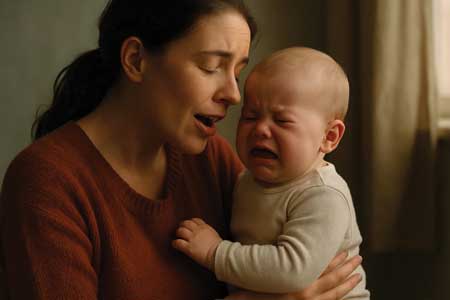
Shaping Emotional Growth
This musical and emotional mirroring helps form what can be described as an early “sound bath” of security and pleasure, where the infant experiences moments of perfect attunement and omnipotence. However, as the child grows, separation becomes inevitable. Moments of absence introduce the infant to the concepts of longing, frustration, and the realization that fulfillment depends on another’s presence and willingness to respond. These early tensions—between closeness and distance, pleasure and pain—are crucial for emotional maturation. (3)
Songs, especially lullabies and nursery rhymes, support this emotional transition. They become symbolic bridges between the unity of early life and the autonomy of growing individuality. Music allows both the child and caregiver to revisit that shared world of closeness while also preparing the child for independence. These early musical experiences echo throughout life, particularly in the complex emotional landscapes of adult relationships. (4)
As individuals continue to develop, the lessons embedded in early musical interactions—trust, rhythm, mutuality, and the capacity to hold conflicting emotions—become central to adult intimacy. The ability to tolerate ambivalence, recognize the subjectivity of others, and engage in reciprocal emotional exchanges often mirrors the infant’s first musical dialogues with the caregiver.
Ultimately, the musical journey that begins in the womb does not end with childhood. It evolves into a lifelong dance of connection, separation, and re-connection. Music remains a vital thread—linking past to present, self to other, and expressing what words often cannot.
Vessels of Transformation
This interweaving of personal narrative, musical structure, and psychoanalytic insight underscores the complex ways in which music—particularly vocal music—can serve as a vehicle for emotional expression, transformation, and containment. Like the transitional object that mediates between the child’s inner world and external reality, the song becomes a container for affect: the rhythm holding the listener in a reliable pattern, the melody offering a path through emotion, and the lyrics giving shape and name to experience. (5)
Moreover, the voice, carrying both the grain of the individual and the weight of cultural meaning, resonates with early experiences of being heard and held. As French literary theorist and philosopher Roland Barthes famously argued, it is in the “grain of the voice” that we are moved—not by what is sung, but by how it is sung, by the texture that transcends language. This grain carries affect beyond semantics, working on us somatically, bypassing cognition, evoking memories or longings we may not even be able to articulate. (6)
Voice as a Bridge to Memory
The historical dimension of voice, too, is crucial. The use of archival vocal styles—as in medieval references or the deliberate revival of folk idioms—can serve as a temporal bridge, connecting listeners to a collective past. In this sense, music becomes a form of cultural memory, a place where individual and collective loss can be mourned and metabolized. It becomes possible to sing what cannot be spoken, to grieve what cannot be named. (7)
This dynamic of holding and letting go, of separation and return, extends to the way music functions in therapeutic contexts. Songs are often used in music therapy to facilitate emotional regulation, narrative construction, and interpersonal connection. In singing with or for another, one simultaneously expresses and contains feelings, offering a shared emotional space. The duality at the heart of musical experience—between repetition and novelty, self and other, presence and absence—mirrors the paradoxes of human attachment itself. (8)
Thus, music, particularly song, occupies a liminal space not only in development, but across the lifespan. It supports the ongoing negotiation between autonomy and connection, grief and continuity, desire and its deferral. Whether through the shimmer of intensity, the slow build of a blues refrain, or the tender memory of a childhood lullaby, song remains a way to hold onto the lost object—not to deny its absence, but to acknowledge it, mourn it, and carry it forward in another form. (9)
Improvisation and Affective Exchange
This musical dialogue in therapy reflects a deeper truth about human communication: the longing to be heard, recognized, and responded to. An analogy between improvisation and relational dialogue not only highlights the creative spontaneity within relationships, but also underscores the emotional stakes embedded in these exchanges. When a partner speaks, consciously or unconsciously, they offer not only words, but a melody of emotion, anticipating or fearing the note that will come in return. (10)
The concept of “musical relating” suggests that intimate relationships, like music, are inherently co-created and dependent on attuned responsiveness. Just as an ensemble adjusts and evolves based on the inflections of each musician, couples learn to improvise around each other’s emotional themes. It is within this improvisational space that meaning can be constructed. The therapist, like a sensitive accompanist, remains open and responsive to these emotional rhythms—aware not only of the “melody” a couple constructs together, but also of the disharmonies that may signal rupture, misunderstanding, or unprocessed trauma. In this way, therapy becomes a site of re-composition, where old themes can be revisited and new harmonies discovered. (11)
A Gateway to Unspoken Depths
In cases where verbal articulation is fraught or blocked, music and musical metaphor provide another avenue for understanding. Musical reverie helps to hold and shape what otherwise might remain formless. The evocative power of a remembered song—one that spontaneously comes to the therapist’s mind or is brought in by the patient—may serve as a bridge to previously inaccessible emotional terrain. These songs can function as “emotional anchors,” embodying a shared history, a moment of rupture, or a longing for repair. (12)
Sometimes, sound bypasses the rational mind and reaches us directly through feeling. Its ambiguity is not a barrier but a feature—offering multiple layers of resonance, much like a dream. In fact, this dream-like state that music can induce allows the therapist’s own associations to become a valuable tool for gaining insight. The reverberation of a lyric or tune in the therapeutic space may suggest a kind of unconscious duet, revealing more than could ever be said directly. (13)
Music in therapy can act not only as metaphor, but as intervention. The rhythm of speech, the tone of voice, and the pauses between words can regulate or dysregulate emotional exchange. Listening psychoanalytically requires us to hear the music behind the words—whether in a patient’s halting silence or a couple’s repetitive argument. These patterns, once heard musically, can be responded to in kind: not simply with interpretation, but with rhythm, empathy, and attunement.
Ultimately, the integration of music into psychoanalytic and therapeutic practice reminds us that human connection is a profoundly aesthetic experience. Whether in love or in therapy, we are not only seeking to be understood—we are seeking to resonate, to harmonize, to be held in a rhythm that makes us feel alive. The emotional clarity and intensity they express often articulate what the couple themselves struggle to put into words. Therefore, songs function as emotional x-rays, revealing the underlying structure of the couple’s bond: its fractures, its pressures, and its potential for healing. (14)
Closing Reflections
Over the course of eight years of graduate studies in the United States, I witnessed firsthand how music has the power to connect people across backgrounds, beliefs, and life experiences. Whether through collaborations, shared listening moments, or dialogue, music became a language through which we communicated joy, longing, and growth—often without saying a word. These encounters taught me that music is far more than organized sound; it is a living, breathing expression of our humanity. Today, I recognize with greater clarity that music is not merely sound—it is the pulse of life itself.
I invite you to listen—not just with your ears, but with your heart and your clinical imagination. What might music reveal about yourself, others, your relational patterns, or the culture in which we are all embedded?
References:
(1) Burgos, Daniel, Rituals and Music in Europe: An Ethnological Study Through Data Analytics, 1st ed. Vol. 13, Cham: Springer (2024).
(2) Sujatashamkuwar, Dr. V Ashokan, et al., “Effect of Classical Music on Fetus: A Review,” Journal of Ayurvedic and Herbal Medicine 8, pp. 119-124 (2022).
(3) Edwards, Jane, Music Therapy and Parent-Infant Bonding, Oxford: Oxford University Press (2011).
(4) Salakka, Ilja, et al., “What Makes Music Memorable? Relationships between Acoustic Musical Features and Music-Evoked Emotions and Memories in Older Adults,” PloS One 16, no. 5 (2021): e0251692–e0251692.
(5) Kennedy, Roger, Power of Music: Psychoanalytic Explorations, Manila, Philippines: Phoenix Publishing House (2020).
(6) Boutin, Aimée, “Roland Barthes’ Grain of the Voice: From Mélodie to Media,” Romance Studies: A Journal of the University of Wales 34, no. 3–4, pp. 163-173 (2016).
(7) Bennett, Andy, ed., Popular Music, Cultural Memory and Heritage, London: Routledge (2017).
(8) Bruscia, Kenneth E., Case Examples of Music Therapy for the Use of Songs in Psychotherapy, Gilsum, NH: Barcelona Pub. (2012).
(9) Aubinet, Stéphane, “Lullabies and Universality: An Ethnographic Review,” Cross-Cultural Research 58, no. 5, pp. 411-446 (2024).
(10) Pavlicevic, Mercédès, “Improvisation in Music Therapy: Human Communication in Sound,” The Journal of Music Therapy 37, no. 4, pp. 269-285 (2000).
(11) De Wever, Julie, et al., “Medical Improvisation Helps Speech Therapists to Improve Their Communication Skills,” Medical Education 57, no. 2, pp. 189-190 (2023).
(12) Ramírez-Meléndez, Rafael, Neurocognitive Music Therapy: Intersecting Music, Medicine and Technology for Health and Well-Being, 1st ed., Cham: Springer International Publishing AG (2023).
(13) Lad, Dhillon, et al., “Feeling the Music: The Feel and Sound of Songs Attenuate Pain,” British Journal of Pain 16, no. 5, pp. 518-527 (2022).
(14) Moran, Perrine, Love Songs: Listening to Couples, Oxfordshire: Karnac Books (2025).