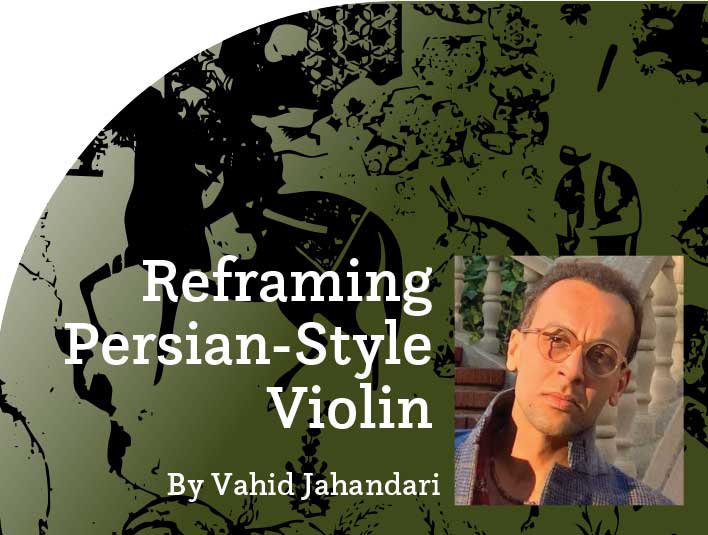
Reframing Persian-Style Violin in a Global Context Introduction
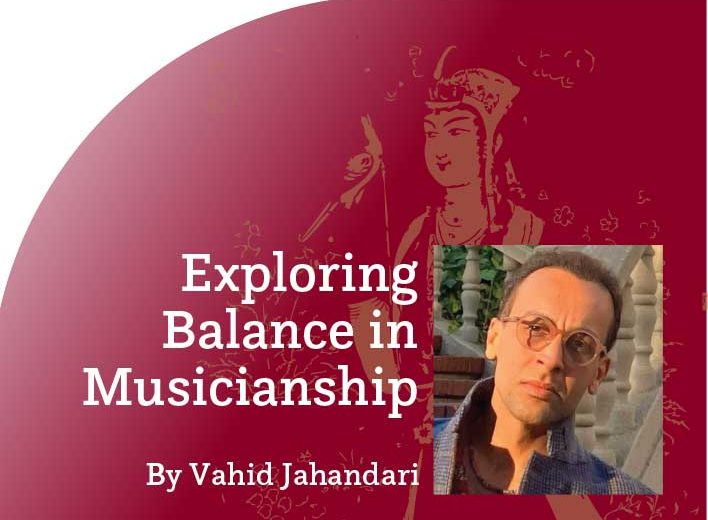
By Vahid Jahandari
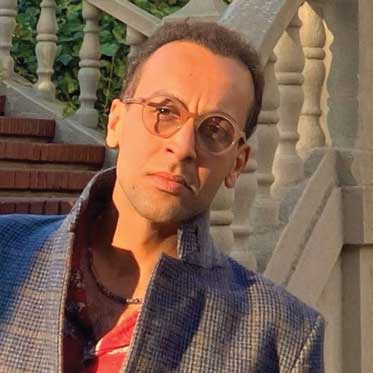 I began playing the violin at an early age, and throughout my childhood and teenage years, my primary focus was on the Dastgāh system of Persian music. While the violin originated and evolved in Europe over centuries, it has found a powerful voice within Persian music. In this article for Peyk, I will explore the aesthetic dimensions of performing violin in the Persian style—an area I have studied and practiced extensively as a performer, composer, and producer.
To listeners unfamiliar with this style, Persian violin may initially seem understated or lacking in complexity, sounding simple or limited. However, based on my experience performing both Western classical and Persian traditional repertoire, and collaborating with internationally acclaimed ensembles to blend musical traditions with Western classical elements, I can attest to the considerable challenges of authentically executing Dastgāh on the violin. I reflect on the technical demands and interpretive approaches that define Persian-style violin, offering insights into its creative possibilities.
Nuances of the Dastgāh
One of the most compelling aspects of performing the violin in the Persian style lies in navigating the intricate modal system known as the Dastgāh. Each—from Shur to Mahur, Segāh to Homāyun—contains within it a world of emotional depth, ornamentation, and microtonal inflection that demands both technical precision and deep cultural sensitivity from the performer. For violinists trained in the Western classical tradition, adapting to this system requires a shift not only in technique but in mindset. The emphasis is not on harmonic development or written notation, but rather on subtle intonation, melodic phrasing, and spontaneous expression.
I developed my Persian violin technique through Ruhollah Khaleqi’s three-volume method and the works of Abolhasan Saba, a pivotal figure in twentieth century Persian music. Saba’s own three-volume method, especially its third volume, features technically demanding and artistically rich pieces—often drawn from Iranian folk music—that remain unmatched in the Persian violin repertoire. These works hold immense artistic potential, inspiring reinterpretations and diverse arrangements by many musicians over the past decades—including Saba’s own students— ensuring their lasting influence and broad relevance.
Challenging the Canon
The third volume of Saba’s method, in particular, features pieces that push the violin’s boundaries. By this, I mean it contains characteristics and nuances rarely found—even in the repertoires of some of the greatest Western classical masters like Niccolò Paganini and Johann Sebastian Bach. While this may seem surprising to some, a closer review reveals these distinctive features clearly. Having personally introduced these works to numerous American-based performers during my residency in the States, I have observed that many find them quite challenging to interpret or perform faithfully according to the written notation.
The same repertoire can be performed on the Kamancheh—the Persian bowed string instrument with a long fingerboard, spike support, and skin-covered resonator, known for its ability to produce quarter tones—but only the most virtuosic performers have mastered all of these works. Pieces like Zange Shotor ( رتش ) and Caravan ( کاروان ) require not only non-standard tunings far removed from the Western classical violin style, but also simultaneous playing across multiple strings, along with exceptionally complex bowing and fingering. These challenges are heightened on the Kamancheh due to its horizontal playing posture and different ergonomics, making faithful execution of these pieces a true test of mastery.
Dynamics of the Kamancheh
Despite the dominance of the Kamancheh in Iranian ensembles—largely because of its exceptional tonal color and status as a traditional Persian instrument—the Persian violin is still frequently used due to its distinctive sound quality and technique. While the Kamancheh’s authentic timbre aligns closely with the modal nuances of Persian music, the violin offers a versatile palette that allows for innovative interpretations within the same repertoire. However, the violin’s Western origins often position it as a complementary voice rather than the primary instrument, with many ensembles favoring the Kamancheh to preserve cultural and historical authenticity.
Nonetheless, the Persian violin continues to hold an important place, especially among performers who appreciate its technical capabilities, whether alongside or instead of the Kamancheh. For example, The Kamkars are a renowned Kurdish-Iranian musical family who have incorporated the violin into their performances. Arsalan Kamkar, a prominent member of the ensemble and a multi-instrumentalist who also plays the violin, has frequently showcased the instrument’s versatility, highlighting its evolving role in contemporary Iranian music.
Retuning the Tradition
The tuning system of the Persian violin—particularly as explored in Saba’s works—marked a significant departure from the fixed, standardized tuning that had dominated the violin in Europe for centuries. In the context of Dastgāh performance, altered tunings are not merely technical adjustments but deeply connected to resonance, timbral color, and the practice of doubling certain dominant tones within a modal trajectory. This doubling, long valued in Iran for its ability to enhance projection and enrich tonal quality, plays a crucial role in shaping the expressive identity of Persian violin.
Saba’s approach embraced these retunings as an integral part of the instrument’s voice, expanding its capacity to embody the subtle microtonal inflections of the radif—the canonical repertoire of Persian music. Interestingly, while many contemporary Western violinists are open to extended techniques and experimental sound production, even within the avant-garde scene, the idea of fundamentally changing the instrument’s tuning often meets resistance. In Persian music, however, such changes are not an avant-garde gesture, but a traditional and time-honored practice—one that remains central to the authentic performance of Dastgāh.
Bridging Musical Worlds
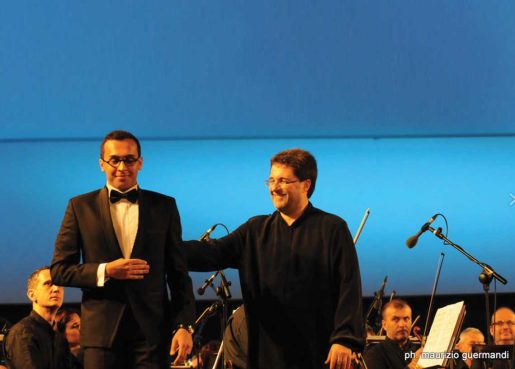
This contrast in tuning philosophy highlights the artistic choices I navigate when blending Persian and Western traditions in my compositions. As I prepared for my audition at Tehran University of Art (2012–2016), I shifted focus to Western classical violin, gaining awareness of key differences from Persian techniques like vibrato, bowing, and phrasing. Though trained as a violinist, I eventually decided to major in Music Composition—a choice reinforced by my skills in piano and music technology. There, I composed two award-winning pieces: a string quintet that won the 2015 Pajman National Contest, and a symphonic piece that won Italy’s 21st Concorso 2 Agosto the same year. In composing these works, I explored the fusion of traditional Persian elements with contemporary techniques, blending Western classical forms—like thematic development and counterpoint—with Persian modal intervals, microtonal harmonies, and rhythmic patterns.
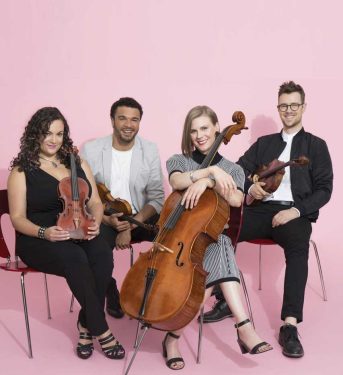
In 2018, I was commissioned by the multiple Grammy-nominated PUBLIQuartet to compose a work for string quartet and electronics focused on “Our Environment.” This piece brought together my ongoing fusion of Persian traditional music, electronic sound design, and experimental performance. I chose not to retune the violins for this project. Given that, other pieces in the program were written in standard tuning, and while my piece included many fresh ideas, retuning would have required significant setup time and posed logistical challenges, making standard tuning the practical choice without compromising the piece’s artistic goals. In this work, I pushed my compositional fusion further by layering extended instrumental techniques with Persian vocal ornamentation—starting with the performers singing while plucking their violins horizontally—and blending voice and instrument within the Dastgāh modal system to create a sound that bridges East and West.
Shaping the Persian Violin Voice
That being said, masters like Saba and Khaleqi were instrumental in shaping the voice of the violin within the Persian musical idiom. Saba, in particular, developed a distinctive style that maintained the lyrical expressiveness of Persian music while expanding the technical vocabulary of the violin to accommodate the nuanced intervals and ornamental gestures of the radif. His recordings and pedagogical works, particular use of glissando, vibrato and tremolos, and variable bow pressure exemplify the kind of interpretive sensitivity required to evoke the spirit of Dastgāh.
Similarly, Khaleqi contributed to the modernization and orchestration of Persian music, integrating the violin into larger ensemble settings while preserving its ability to deliver deeply introspective melodies. His understanding of timbre and dynamic contrast allowed the violin to support ensemble roles, particularly in radio programs, where many legendary performances of the Persian violin style were documented around the mid-twentieth century and the practice was later continued by his colleagues.
Subtlety and Structure in Performance
Performing within this tradition challenges the violinist to internalize the gushehs (melodic motifs) that make up a Dastgāh, and to navigate them with improvisational freedom while maintaining structural integrity. The aesthetic beauty of Persian violin performance lies not necessarily in virtuosic display, but in the intentional shaping of sound: the slight pull of a note just shy of a tempered pitch, the way a phrase breathes and pauses, the delicate trill that suggests both restraint and longing. These are the micro-expressions that give life to a performance and connect the musician to the emotional core of Persian music.
In my own journey, I have often found that performing pieces from the radif, especially as transmitted by Saba or Khaleqi, requires a profound engagement with listening—both to historical recordings and to the instrument itself. Unlike Western classical music, which often encourages projecting sound outward in large concert halls, Persian violin invites the player to draw the listener inward, toward intimacy and introspection. This inversion of projection is part of what makes the Persian style a challenging discipline.
Reclaiming Sound in the Homeland
Since settling back in Tehran, my daily practice has increasingly centered around the Persian violin repertoire that shaped my early foundation and remained a constant thread throughout my professional development. Reengaging with these pieces—many of which I memorized in my youth—has deepened my respect for their depth and complexity. Among them, the works of Saba stand out not only for their lyrical beauty, but also for their expressive demands. His mastery in adapting the Dastgah system to the Western violin creates a unique challenge that requires both interpretive finesse and deep cultural sensitivity. Revisiting this repertoire from within its cultural home has been a profoundly grounding experience.
In recent experimental productions, I’ve sought to reinterpret Saba’s music by subtly blending it with atmospheric electronic textures. Whether in Bayat Tork, Mahoor, or Afshari, the goal has been to expand the expressive terrain of these works—illuminating their emotional richness through contemporary tools. In my original pieces, I extend this approach into fully improvised territory, drawing on both Persian and Western traditions to sculpt a sound world that feels suspended between time periods and places. Through these efforts, I continue to explore a hybrid musical identity—one rooted in tradition, but reaching outward, attuned to the evolving possibilities of sonic expression.
Final Reflection
Through my years of performance, study, and composition, I have come to see that Persian-style music is more than an instrument or a technique—it is a living language. Violin’s voice may carry the modal subtleties of the Dastgāh, the resonances of altered tunings, and the expressive gestures passed down from old masters. It embodies history, memory, and the ongoing dialogue between tradition and innovation.
In this way, music is not merely sound projected into the air—it is thought, breath, movement, and emotion woven together. The Persian violin, in particular, becomes a bridge: between East and West, past and present, intimate expression and bold reinterpretation. Engaging with it is not simply performance, but participation in a cultural continuum that shapes identity and spirit. It invites both musician and listener into a deeper connection with themselves, their heritage, and the wider world of sound.
For more info about Vahid Jahandari, visit: vahidjahandari.com