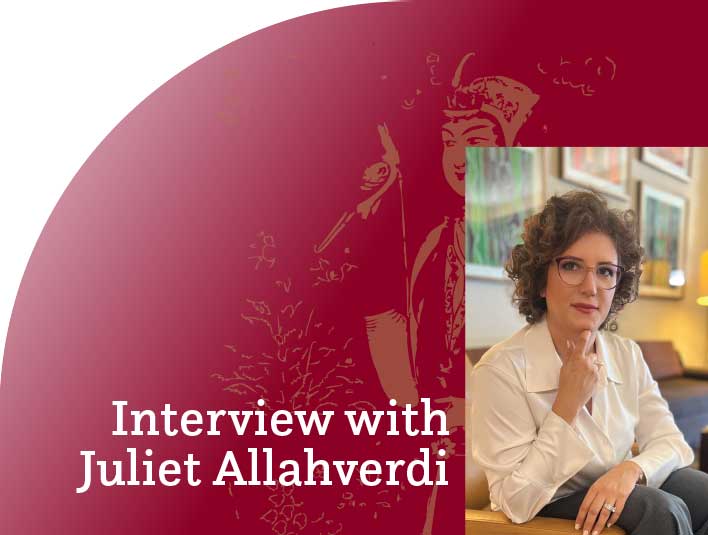
Interview with Juliet Allahverdi,
The Founder and CEO of Global Disability Services
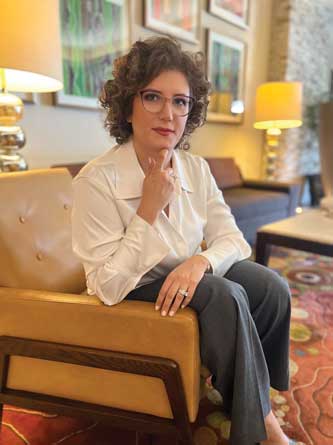
A few weeks ago, I met Juliet Allahverdi at ISSD. She mentioned that she is temporarily moving to San Diego to establish a branch of her company here. When I learned more about what her company does, I became very interested in introducing her to the community. Juliet explained that her company is well-established in Northern California and Los Angeles, where it helps families—particularly those who speak Persian—navigate the system and access resources. Now, she aims to extend her services to San Diego to assist Iranian and Afghan families with disabled children. Below is my interview with her.
Ali Sadr
Ali Sadr (AS): It’s a pleasure to meet you, and welcome to San Diego! Could you please share a bit about yourself and your background?
Juliet Allahverdi (JA): Thank you — it’s truly wonderful to be here. San Diego has a unique energy: warm, diverse, and full of families who care deeply about their children’s future. It feels like the right place for our next chapter.
My own journey has been shaped by education, immigration, culture, and a lifelong curiosity about people. I originally began my academic path in Statistics, which gave me a foundation in analytical thinking. Later, I completed an MBA in Executive Management with a focus on Entrepreneurship, where I learned how to build systems, lead teams, and innovate. Over time, my interest expanded into human behavior, so I studied Epidemiology, along with coursework in Abnormal Psychology and Clinical Psychology.
But education alone isn’t what shaped my purpose. Before immigrating to the United States, I worked across several industries in Iran—including founding an eco-tourism company, participating in a machinery enterprise, working in academic environments, and collaborating in artistic and cultural communities. These experiences taught me that a person’s productivity and creativity are deeply connected to their environment, mental health, physical well-being, and upbringing.
Immigrating to the U.S. completely transformed my path. I began working in various systems—universities, community colleges, the Department of Social Services, Social Security programs, county mental health departments, programs for individuals returning from war, and eventually the Regional Center system. In each of these roles, I witnessed families trying to survive inside complicated systems. Many did not know how to navigate resources or advocate for their rights. That real human struggle became the foundation of my mission today.
AS: Your impressive resume showcases a wide range of experiences. What led you to work with individuals with developmental disabilities?
JA: It wasn’t a single moment; it was a collection of moments that slowly came together.
Working with universities, county health programs, social services, trauma-related programs, and community agencies helped me see how many families—especially immigrants—are trying to manage overwhelming challenges with very little support. But it was my work inside the Regional Center system that truly changed everything. I saw parents trying to make sense of a diagnosis, siblings silently taking on adult responsibilities, and adults with disabilities wanting independence while facing barriers every step of the way.
In many cases, it felt like the system was functioning at a surface level: reports were completed, meetings were scheduled, and forms were processed. But underneath that, many families were still suffering silently. The emotional realities behind disability—fear, stigma, confusion, exhaustion, denial—were not being addressed.
That’s when I realized something important: Real change does not happen behind a desk.
It happens inside homes, in real conversations, when we sit with a family long enough to hear their story, understand their fears, and remind them that they are not alone.
My passion naturally shifted toward supporting individuals with developmental disabilities because I saw how deeply these families needed a combination of cultural understanding, advocacy, and respectful guidance. That calling ultimately became the foundation of Global Disability Services.
AS: Can you describe Global Disability Services and how it originated?
JA: Global Disability Services (GDS) is an LLC corporation and was born from a very simple belief: No family should feel alone on the journey of disability—no matter their culture, language, or income.
After years of working in the health sciences, social service systems, psychology, and international settings, two truths became impossible to ignore:
Families need better access to existing services, especially immigrant families, including Persian-speaking communities, who often struggle with language barriers, cultural stigma, and a lack of trust in government systems.
The voices of these families need to be brought to global platforms. Disability is a global issue, and yet many countries—including Iran—still struggle with stigma, lack of awareness, and insufficient resources.
GDS was created with a mission that works in two directions:
(1) Bringing resources to families
We help families access services such as respite, personal assistance, individual living skills, behavioral services, social and life-skills support, parent coaching, transition and vocational planning, long-term care and future planning, and school and IEP guidance. We help families understand the system, use their rights, and receive culturally appropriate support.
(2) Bringing families’ voices to global organizations
GDS is actively building partnerships with international disability advocates, academic institutions, global organizations such as WHO and UNICEF (in progress), and research institutions, including a developing academic initiative with the University of North Carolina.
Our goal is to transform the disability conversation not only in the U.S. but also internationally—particularly in regions where disability awareness is still emerging. GDS is more than a service provider. It is a bridge, connecting cultures, families, and global systems.
AS: In Iranian culture, developmental disabilities can be considered taboo, and some parents may even deny their existence. How do you approach these families?
JA: With compassion, with cultural awareness, and with zero judgment. In many Iranian and Middle Eastern households, disability is associated with fear, shame, or misunderstanding. Parents worry about community judgment, marriage prospects, and the impact on family reputation. Some may deny the diagnosis because accepting it feels like accepting blame.
When I meet families like this, I start with humanity before diagnosis. I acknowledge their fears, I respect their cultural values and I never force clinical language or push labels. Instead, I explain disability through a human and scientific lens, not a stigmatized one: genetics, environmental exposures, trauma, prenatal health, nutrition, early development, and family stress and lifestyle patterns.
Once families understand that disability is not a moral failure—not a curse, not a punishment, not a shameful secret—they begin to open up. Many parents simply need someone who understands their culture and can guide them gently toward acceptance.
My message to them is always the same: Disability is not the end of your child’s story. It is the beginning of a different one and it can be full of possibility with the right support.
AS: What types of services does your organization provide and how do you collaborate with government organizations?
JA: GDS provides a wide range of support to individuals with developmental disabilities and their families.
Direct Services: respite, personal assistance, individual living skills (ILS), social and life-skills coaching, behavioral support (through partners), parent coaching and education, transition and employment, support, and community integration
Family Support & Advocacy: navigating the Regional Center system, understanding assessments and service rights, support with IEPs and school systems, mental health and wellness guidance, long-term planning, cultural bridging, and interpreter-based assistance
Government & Community Collaboration: working with Regional Centers, county health departments, social service agencies, academic institutions, nonprofits, and global organizations GDS acts as a bridge between families and systems that sometimes struggle to reach minority or immigrant communities. Our cultural and linguistic understanding allows us to fill a gap that government agencies often cannot.
AS: You are now expanding your services into San Diego. What kind of support are you seeking and how can interested individuals get in touch with you?
JA: San Diego is becoming home to a growing Persian-speaking population, so the need for culturally-aligned disability services is rising. Our work has been strong in Northern California and Los Angeles; now we want to bring the same level of support, advocacy, and education to families here in San Diego.
We are currently seeking ILS instructors; respite providers; personal assistants; behavioral aides; psychology, child development, and public health graduates; bilingual English/Farsi staff; and individuals passionate about advocacy and community empowerment.
We also welcome students, volunteers, professionals, community partners, and anyone who wants meaningful work that changes lives.
AS: Thank you very much for your information. I wish you success. How can people contact you?
JA: Thank you for this opportunity. We look forward to expanding our mission in San Diego, building partnerships, training new staff, and supporting families who deserve to be seen, heard, and supported.
Here is our contact information:
Global Disability Services (GDS)
www.globaldisabilityservices.com
info@globaldisabilityservices.com
818-951-4565