

Do We Still Have Our Own Thoughts?
Aryana Mahasseni
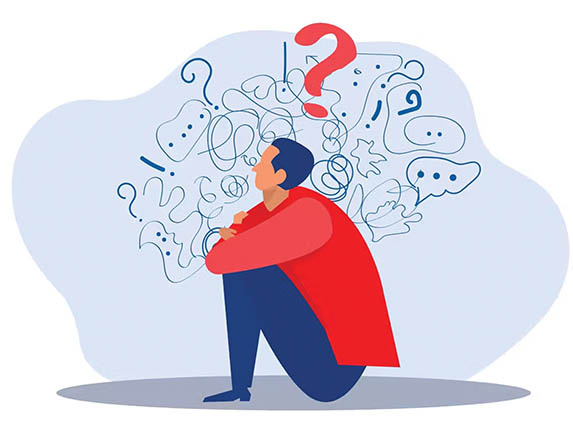
There was a time when having a question meant sitting with it. You might ask a friend or look through a book. You might argue with your parents at the dinner table and simply wonder about something for a few days without immediately knowing the answer.
Now, almost every question has an immediate response. We have Google. We have TikTok. We have Instagram. We have YouTube. We have podcasts, Reddit, ChatGPT, news apps, comment sections, and endless feeds designed to make sure there is always something else to watch. We have access to more information than any generation before us. So sometimes, I can not help but wonder if having access to so many opinions has made it harder to develop our own.
Think about the last time you watched a movie you loved. Before you could even decide how you felt about it, you probably saw someone else’s review. Maybe you opened social media and watched someone explain why the ending was brilliant. Maybe someone told you the main character was actually the villain or maybe you read comments from people who hated the movie and suddenly started noticing every small element they criticized.
At some point, I have even noticed personally that I begin to wonder more about what I am supposed to think, rather than purely asking myself: “What did I think?”
This happens with almost everything. We see a restaurant online before we eat there. We hear someone’s opinion about an album before listening to it. We watch other people’s reactions to a political event before forming our own reaction. We read reviews before deciding whether a book is worth opening or even look at someone else’s interpretation of a painting before deciding whether we find it insightful.
Even our most personal experiences often come with a template. There is a right way to dress for college. A right way to decorate your dorm. A right way to spend your summer. A right way to study. A right way to have a relationship. A right way to travel.
The internet does not simply show us what other people are doing. It gives us a constant stream of instructions for how we should feel about what we are doing. And the strangest part is how normal this has become. We scroll while eating. We listen to podcasts while walking. We watch videos while getting ready. We check our phones during movies. We fill silence with music. We fill boredom with content.
When do we actually have time to think?
Maybe boredom used to play a bigger role in developing a personality than we realize. When there was nothing to watch, people had to sit with themselves. They had to daydream and make up stories. They had to write in journals or stare out car windows and let their minds wander. Now, the second we feel bored, we reach for our phones, and the content disappears almost as quickly as we consume it. We are constantly being told what matters, which raises an uncomfortable question. If we are constantly consuming other people’s thoughts, when do we make room for our own?
This does not mean information is bad. The internet has given people access to education, communities, perspectives, and stories they never would have encountered otherwise. Someone living in a small town can hear directly from people on the other side of the world. Someone struggling with an experience can find another person who understands, and a student can learn about almost any subject within seconds.
The problem is not at all about simply having access to information but is instead about leaving enough space to pause consumption and authentically decide what we believe.
Sometimes it feels easy to confuse familiarity with the truth. After we see the same opinion ten times, we start assuming everyone thinks that way. We hear the same explanation repeatedly and forget there were other ways to understand the issue. We see thousands of people agreeing in a comment section and mistake blind or uninformed agreement for objectivity. The answer is certainly not to delete every app or reject technology. That would be unrealistic, especially for our generation. Maybe the answer is simply to create moments where nobody else gets to speak first.
Read the book before reading the reviews.
Listen to the album before watching someone’s ranking.
See the movie before hearing the ending explained.
Write down what you think before searching for what everyone else thinks.
Sit in silence sometimes.
Let yourself be bored.
Have an opinion before checking whether your opinion is popular.
There is something valuable about discovering what you think without an audience. Our generation has been given an incredible amount of information, but we cannot sacrifice our originality. Accessible information is not the same as authentic thought and real thought requires time, uncertainty, and being wrong sometimes. It requires sitting with an idea long enough to decide whether you actually believe it, but it is something we as humans hold a responsibility to do. To have our own thoughts without shutting the world out.
Aryana Mahasseni is an ISSD alumnus and a freshman at UCLA