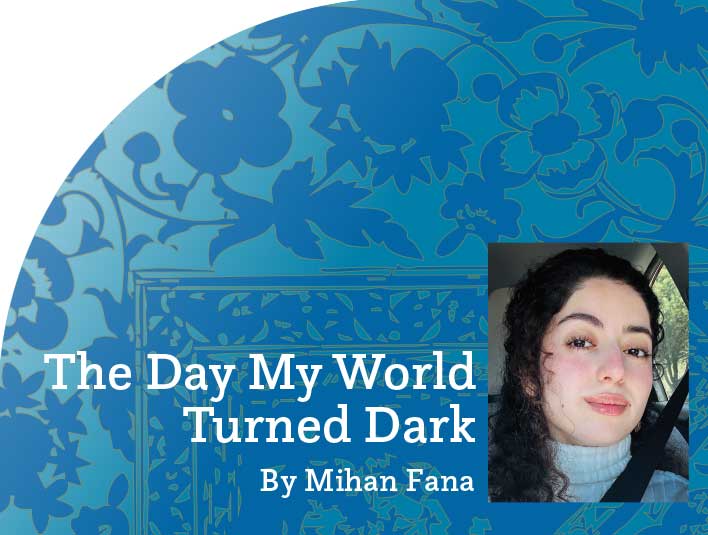
The Day My World Turned Dark
Mihan Fana
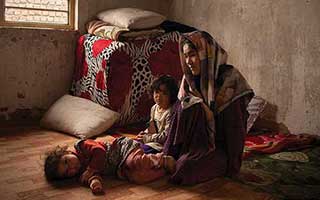 The morning when the news was heard will never be forgotten—the Taliban had taken full control of the country. Although the sun had risen, no sleep had reached our eyes for days. One city after another was falling, and fear planted itself deeply in every heart. It felt as if the sky had turned black, leaving no space for hope. A lump of despair formed in my throat—the kind of sorrow felt when everything is taken away. Life, as it had been known, had ended. Time was frozen, and no thoughts for tomorrow could be formed. Numbness had taken control, and the weight of loss could only be endured in silence.
As children, brighter futures had always been imagined, futures where girls would be allowed to attend school and stand beside men to rebuild the nation. However, those dreams were erased within moments.
In this essay, the personal struggles I experienced under Taliban rule, the loss of freedom, and the silent strength carried by Afghan women will be shared—even when the world chooses to look away.
The Day Everything Changed
The day when full control was seized by the Taliban was not only the fall of a government, it was the collapse of life itself. Even before official announcements were made, fear had already reached every home and every street. The Taliban had already arrived at the gate of our home, but I was not there. I was outside with my father.
That day, we saw the young soldiers of the former government for the last time, those brave men whose efforts to protect us had been exhausted. On one side of the street, police officers were stationed. On the other side, the Taliban fighters were advancing. The road was empty—no pedestrians, no vehicles, not even birds. Silence filled everything, broken only by the sound of my father’s motorcycle. Every meter took us farther from the police and closer to the Taliban. Every turn of the wheel brought us closer to fear and to the end of the life we had once known.
In those moments, no words were spoken between my father and me. Only glances were exchanged, full of unspoken fear, worry, and silent prayers. We didn’t know what would happen next, but deep down, we understood that nothing would ever be the same again. The road ahead felt endless, yet every second passed too quickly.
The First Time They Were Seen
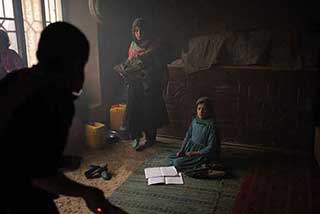
Upon reaching our home, I saw the Taliban for the first time. Terror spread through every cell in my body—my muscles weakened, and it felt as if my bones would shatter under the weight of fear. Even though I hoped the walls of our home would protect us, the place that once echoed with laughter had turned into a prison of silence. The air itself felt heavy, like fear had soaked into every corner.
I made a vow to myself that I would never leave the house again. But even inside, there was no true safety. The Taliban were raiding houses and searching for former soldiers or anyone connected to the previous government. And for those they found, death was the only end. Doors and windows that once brought light and comfort became reminders of how vulnerable we truly were.
The sound of footsteps outside made my heart pound so loudly that I could barely hear myself breathe. Every knock on a neighbor’s door sent chills down my spine, and every distant scream felt like a warning of what could happen next. The safety we thought we had was only an illusion, one that could be shattered at any moment.
The Airport and the Desperation
In the days that followed, desperation consumed the country. Thousands of people gathered at the airport, all trying desperately to escape. We heard stories of people who had clung to the wings of airplanes, people who risked everything for even the smallest chance at freedom. The sky was filled with falling bodies, turning into heartbreaking symbols of a nation whose hope had been shattered.
There was no time for logic. No one had made careful plans or even thought about where they were going. The only goal was to leave. Men abandoned their wives and children, believing there was no future left under Taliban rule.
Schools were closed. Universities were shut down. At first, even men weren’t allowed to return. But eventually, the doors opened for them. For women, they never did. Education was stolen from us, not gradually, but all at once. Years of study, dreams of becoming doctors, engineers, artists—all of it was erased in hours.
Parents begged soldiers to take their daughters. Babies were handed over barbed wires in the hope that someone, anyone, might carry them to safety. No one knew whether those babies had survived or disappeared into the chaos. But the desperation of those moments carved itself into every heart.
The Collapse of a Nation
The collapse of Afghanistan happened in just a few days. A country once filled with hope and progress was dragged back into ignorance and brutality. Football stadiums that once echoed with cheers went silent. Female singers and performers disappeared from screens. Music was banned. Laughter faded. Even color drained from daily life. In their place came fear—and silence—ruled by a cruel and rigid ideology.
But the silence didn’t just belong to Afghanistan. The world also fell silent. Afghan voices were ignored, and even now, the suffering of Afghan women is overlooked. The world’s silence only deepened the silence within us.
Millions witnessed the fall of our nation, but few acted. A culture, a history, and generations of dreams turned to ashes, while the world simply looked away and moved on.
Raw, Honest, and Full of Tears
I am not offering apologies for sharing this dark and painful story—because it had to be shared. I wrote every word through tears. With every sentence, I mourned the girl I used to be, the dreams we lost, and the silence we were forced to carry. I never wrote this to ask for pity. That was never the purpose. I wrote it because the weight of silence had become too heavy to hold.
I kept this story locked inside for too long. Today, for the first time, I’m letting it go—not expecting anyone to fix what was broken, but simply because these words needed to be spoken.
This pain is not mine alone. It belongs to every Afghan girl whose future was stolen before her eyes. Some suffered more, some less, but we all carry the same scar.
This story doesn’t just belong to me—it belongs to every Afghan daughter, sister, and mother who was told her life didn’t matter. Even if the world forgets, we won’t.
We will never forget the day hope disappeared.
We will never forget the strength we found in silence.
We will never forget the courage it took just to keep breathing when the future was gone.
And that strength will stay with us—always.
Mihan Fana is 20 years old. She is originally from Harat, Afghanistan, and lives in San Diego.