
Thomas Jefferson’s Vision for the United States and How It Turned Out
Separation of Powers Series – Part 2
By Hooshyar Afsar
Introduction
I started this series in the last issue by writing about habeas corpus and its relevance to our community. [1] In this part, I will focus on one of the most prominent and contradictory founding fathers of the United States—namely, Thomas Jefferson—and his role in the formation of the United States as a republic with the principles of separation of powers. In this article, my focus will be on Jefferson’s role in stabilizing the U.S. as a republic in the face of significant opposition who praised the British monarchy and even ridiculed the United States constitution.
Jefferson of Virginia: A Man of Contradictions
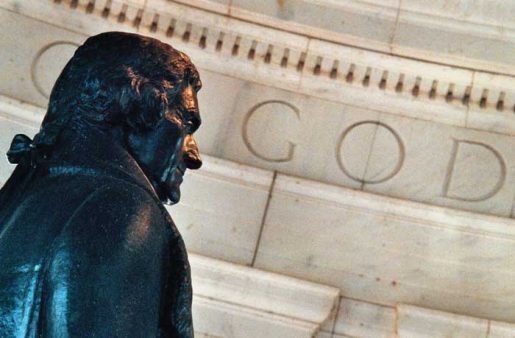
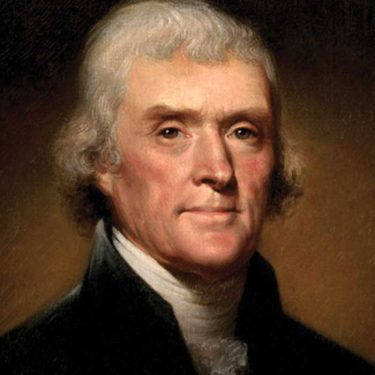
Thomas Jefferson was born in 1743 and lived for 83 years during a very tumultuous period of early American history. He was the main author of the U.S. Declaration of Independence, the 1776 document which declared the American colonies independent from their British rule during the Revolutionary War, which had begun the year before. He also served many prominent roles in the newly-formed nation state (the U.S.)—first, as the first Secretary of State under President George Washington; then as vice president under the second U.S. president, John Adams; and then as the third president of the United States, being elected for two consecutive terms in 1800 and 1804. Jefferson participated in such historic events as the colonies’ declaration of independence, the Revolutionary War, as minister (ambassador) to France during the French revolution, and in the formation of the United States itself. Perhaps no other American founder went through such broad-ranging experiences nationally and internationally.
It is fair to say that most founding fathers lived lives of contradictions. Many opposed slavery, but did not abolish it. They sought advice from Native Americans while forming the new United States, yet paved the way for a genocide against them. [2] Personal contradictions were never more stark than in the person of Jefferson, who claimed to be against slavery despite the fact he: owned hundreds of slaves throughout his life; omitted an anti-slavery paragraph from his first draft of the Declaration of Independence; expressed clearly racist views about Black people (referring to them as “intellectually inferior”) [3]; and impregnated his slave, having at least five children with her who were themselves enslaved by him. [4]
Having said all the above, Jefferson played a key role in stabilizing a constitutional framework that paved the way for future revolutionary changes, especially during his two-term presidency. Undoubtedly, one of the great contributions of Jefferson was stabilizing the United States government as a republic with separate branches with checks and balances—hence the separation of powers—in the face of frantic opposition in the early years of the republic. We will discuss that further below.
Declaring Independence
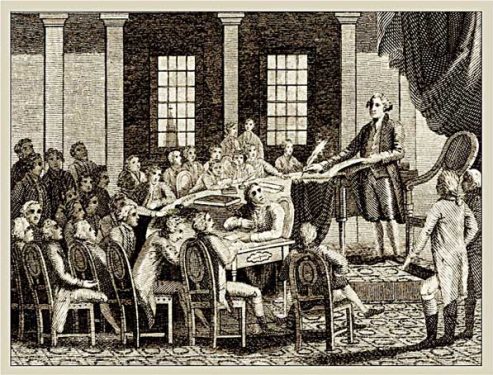
Considered one of the most important documents in not just American but world history, the power of the U.S. Declaration of Independence resides in its preamble (introduction) and then its list of twenty-seven “grievances” (complaints) against the colonizer, Great Britain.
The preamble forms the basis of the American nation on the “inalienable rights” of “Life, Liberty and the pursuit of Happiness,” stating: “… to secure these rights, Governments are instituted among Men, deriving their just powers from the consent of the governed.” [5] From Jefferson’s viewpoint (and the viewpoint of all the founding fathers who signed the declaration), the basis of the power of the government is approval of the governed (i.e., the public).
Jefferson approached the declaration’s grievances with a focus on “usurpation,” meaning wrongful seizure of power. In a sense, more than eleven years before the constitutional convention that put in place three branches of power that would make up the United States—namely, the legislative (Congress), executive (presidency), and judiciary (courts) branches—and safeguards for avoiding seizure of power by one branch, Jefferson’s list of complaints against the tyrant king talked about the king’s: refusal to abide by the laws of his own colonies, dissolution of the legislatures of the colonies, blocking of the “administration of justice” by the courts by considering himself above the laws, “keeping standing armies among us at the time of peace,” and last, but not least, “transporting us beyond Seas to be tried for pretended offences.” [5] In a way, by way of the stated grievances and what shouldn’t be allowed, Jefferson sets up the conversation for what a government should be, namely one with separate branches of power and checks and balances. His vision was a republic that could utilize its separate branches in a way that would prevent the absolute power being imposed upon the American colonies by a tyrant such as the “King of Great Britain.” [5]
Jefferson and His Vision for the United States: Principles and Compromise
Jefferson’s vision for the United States—inspired by the famous thinkers of the Enlightenment period, who thought checks and balances within a government was the best defense against tyranny—was a decentralized federal government and an agrarian economy where most of the power stayed with the states. He was concerned with early attempts to amass power in the federal government, and more specifically, the executive branch. His concern was that too much power in the federal government and the executive could result in yet another tyranny. Two historical cases stand out.
The first was then-Vice President Jefferson’s opposition to the Alien and Sedition Acts of 1798, used by President John Adams’ administration during a “quasi war” with France, which gave the executive branch extreme powers by criminalizing free speech, essentially forbidding anyone to “write, print, utter or publish … any false, scandalous, and malicious writing or writings against the government of the United States.” Jeferson viewed this power grab as “experiencing the end of American liberty,” though he continued to stay in the Administration. [6] In a sense, he lived with principle and compromise at the same time.
The context of the politics of the time was extreme, not unlike what we see today. The two main political parties were the Federalists, to which John Adams belonged, and the Democratic-Republican Party, founded by Jefferson and James Madison. At the time, the presidential candidate who got the second highest number of electoral votes was elected vice president, hence Jeferson’s position in a hostile administration dominated by the Federalists. The Federalists, led by Alexander Hamilton, openly ridiculed the U.S. Constitution and did not hide their desire for the British system of laws and a reversion to monarchy. Jefferson stood for the possibility of the future republic as defined in the U.S. constitution in such uncertain times. He then successfully ran for president in the elections of 1800 and 1804 and was able to lead further realization and stabilization of such a republic with principles of separation of powers.
Secondly, Jefferson opposed the Federalists’ attempt to amass power in the executive branch with a federal treasury. Hamilton, who was the Secretary of Treasury in the first Washington administration, had a vision of a strong federal government with a powerful treasury and a standing army. Hamilton wanted the U.S. Treasury to assume the debt of all the states (colonies before the American revolution), amounting to about 25 million dollars, thereby creating a strong, centralized treasury. Jefferson, who opposed a strong federal government, finally agreed to this and, in return, Hamilton accepted the creation of the future capital closer to the south in the District of Columbia (today’s Washington, DC). This compromise was the first step in transforming Jefferson’s vision. He was able to mix the art of power with the art of compromise.
Jefferson and the Constitution
Jefferson saw the importance of the constitution as a document based on republicanism and separation of powers. He saw this as a dynamic process. In a letter to James Madison, he went even further and said that every generation, specifically every nineteen years, should rewrite the constitution and emphasized the rights of the “living” in writing their own destiny. [7] This approach definitely showed itself in the amendment clause of the constitution and the twenty-seven amendments that have followed. The most significant amendments that further democratized and humanized the United States were the first ten amendments, known as the “Bill of Rights;” the post-Civil War 13th, 14th and 15th Amendments, which abolished slavery, declared black people citizens, and granted black men the right to vote; and, last but not least, the 19th Amendment, known as “women’s suffrage,” which ended discrimination in voting based on gender.
The Constitution of the United States provides other specific mechanisms to utilize separation of powers by the way of the Congress (legislative branch), having the power to impeach the president as a check on the executive branch. Article I clearly states who has the power to impeach the president (Congress) and the details of the impeachment process. Later, the 22nd and 25th Amendments limit the terms of the president to only two terms and provide another mechanism to remove the president if the vice president, along with the majority of the cabinet or Congress, determine that the president is unable to fulfill his duties. Furthermore, constitutional experts have argued that the beginning sentence of Article II of the constitution, stating that “[t]he executive power shall be vested in a president of the United States of America,” is too vague because it does not clearly define what “The executive power” is and it paves the way for tyranny. [8]
Ending Notes
Today in the United States, we witness many similarities with Jeffersonson’s era in terms of disruptions in the separation of powers in the republic. The Aliens and Sedition Acts of 1798 are again being used, this time for arresting students with the charges of “threats to national security.” And one of the fundamental checks on the executive branch—the federal judicial system (federal courts)—has ruled that at least in hundreds of cases, the basic constitutional rights of recently-arrested immigration detainees have not been honored.
With such developments, the role of our community in standing by the principles of the U.S. Constitution, separation of powers, and rule of law has gained even more importance. Our community consists of hundreds of thousands of Iranian Americans with substantial resources. We could and should learn from the history of Jefferson’s ordeals and use these resources to stand for the U.S. Constitution, democracy, and human rights.
References:
[1] – https://peykmagazine.com/en/2025/07/02/separation-of-powers-series-part-1/
[2]-https://blogs.loc.gov/law/2023/09/the-haudenosaunee-confederacy-and-the-constitution/#:~:text=The%20Senate%20recognized,itself%20(3%2D4).%E2%80%9D
[3] – Kendi, Ibram X. 2016. Stamped from the Beginning. Bold Type Books, Paperback Edition, PP 109-111
[4] – Meacham, Jon. 2013. Thomas Jefferson: The Art of Power. Random House Trade Paperback Edition, PP 216-219.
[5] – https://www.archives.gov/founding-docs/declaration-transcript
[6] – Meacham, Jon. 2013. Thomas Jefferson: The Art of Power. Random House Trade Paperback Edition, P 313.
[7] – https://oll.libertyfund.org/quotes/thomas-jefferson-on-whether-the-american-constitution-is-binding-on-those-who-were-not-born-at-the-time-it-was-signed-and-agreed-to-1789
[8] – https://www.nytimes.com/2025/08/21/opinion/trump-constitution-unitary-executive.html