
Educational Series: The Science of Nutrition
Are Fats Good for You?
By Mohammad Ahrar, PhD
 Introduction
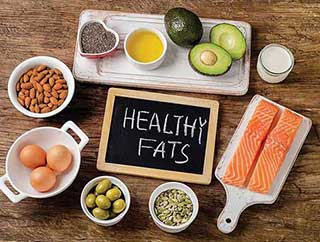
Fats are one of the major nutrients that the body needs for health and normal growth. However, not all fats are created equal. The type of fat and the amount consumed may have different effects on the body. This article reviews some scientific information about fats.
What Are Fats Made Of?
Fats are made of two components, fatty acids and glycerol. Fatty acids are composed of a chain of carbon atoms with hydrogen atoms attached to them. Short-chain fatty acids have 4 to 8 carbons, and long-chain fatty acids commonly have up to 22 carbons. Glycerol is a three-carbon alcohol. When 3 fatty acids are attached to a glycerol, the compound is called a triglyceride or neutral fat. Most animal fats, as well as fats in the human body, are in the form of triglycerides. Figure 1 shows a typical triglyceride.
Saturated fats are made of saturated fatty acids. Saturated fatty acids have all the carbons in the chain filled with hydrogen ions (saturated with hydrogen). Most fats from animal sources—such as lard, fatty meat, milk fat, and eggs—contain a large proportion of saturated fatty acids. (The top two fatty acids in the figure above represent saturated fatty acids.)
Unsaturated fats contain at least one unsaturated fatty acid in which some of the carbons are not filled with hydrogen. As a result, some of the carbons in an unsaturated fatty acid are bonded to each other by a double bond. (In the figure above and the picture below, the lower fatty acid represents an unsaturated fatty acid. A triglyceride that has at least one double bond is considered an unsaturated fat.)
Polyunsaturated fatty acids have more than one double bond. Most plant-based oils, such as canola and corn oil, contain large proportions of polyunsaturated fatty acids.
Most fats and oils contain both saturated as well as unsaturated fatty acids in different proportions. For example, olive oil contains 14% saturated fatty acids and 86% unsaturated fatty acids; butter contains 64% saturated fatty acids and 36% unsaturated fatty acids; and coconut oil contains about 86% saturated fatty acids and 14% unsaturated fatty acids.
Role of Fats in the Body
Fats are a major energy reserve for the body, providing twice as much energy as carbohydrates and proteins. Fats store excess calories in a safe way so you can mobilize the fat stores when you are hungry.
They are also key to the function of bodily health. Fats provide structure to the outer membrane of every cell in your body, including the cells in the nervous system. The brain is mainly made of different forms of fat, such as phospholipids and cholesterol. The myelin sheath in the brain is made of a fatty layer that covers the axon of most nerve cells in the nervous system; degeneration of this sheath is what causes MS, Multiple Sclerosis. Fat is necessary for insulation, the protection of internal organs, and hormone regulation in both men and women. It is critical for reproductive function, including normal secretion of sex hormones, pubertal development, pregnancy, lactation, and supporting immune function. Essential fatty acids and cholesterol are key regulators of blood pressure and of the health of a growing fetus.
Fats are necessary for the absorption of fat-soluble vitamins, such as vitamins A, D, E, and K. Without fat in the diet, the absorption of these vitamins will be very limited. Too little body fat can lead to various health problems and even death.
Essential Fatty Acids
Some fatty acids can be made in the body, but polyunsaturated fatty acids—such as omega-3 and omega 6 fatty acids—cannot be synthesized and are therefore called essential fatty acids. As a result, they must be provided in the food that you eat.
Lipids (fats) that contain both omega-3 and omega-6 fatty acids are necessary for normal functions of body organs, such as the reproductive system, normal eyesight, healthy nerve cells in a growing embryo, and for the maintenance of normal brain function and learning ability in adults.
Omega-3 fatty acids: Any polyunsaturated fatty acid whose first double bond lies between carbon 3 and carbon 4 is called an omega-3 fatty acid. Among the many omega-3 fatty acids, there are three types that are important for human physiology. One is alpha-linolenic acid (ALA), found in plant oils; the other two types are eicosapentaenoic acid (EPA) and docosahexaenoic acid (DHA), abundant in marine animals.
The physiological potency of EPA and DHA is much greater than that of alpha ALA from plant sources. The DHA omega-3 fatty acid is the principal fatty acid in the brain, necessary for the growth and functional development of the brain in infants, and is required for the maintenance of normal brain function and learning ability in adults. Although humans can convert some short-chain omega-3 fatty acids to long-chain forms (EPA, DHA), the efficiency is low, about 5%. The efficiency of conversion is higher in women.
Foods high in omega-3 ALA include chia seeds, flaxseed (linseed), walnuts, hemp seed, and rapeseed oil (canola oil). Foods high in omega-3 DHA include eggs, mother’s milk, fish oil, squid oils (calamari), and cold-water fishes such as salmon, herring, tuna, and sardines.
Omega-6 fatty acids: Polyunsaturated fatty acids whose first double bond lies between carbon 5 and 6 are called omega-6 fatty acids.
Like omega-3, omega-6 fatty acids are required by our bodies and both are found in large amounts in the brain. However, omega-3 fatty acids are more beneficial for healthy brain function, reduce inflammation in different parts of the body, and are beneficial for the cardiovascular system. Although omega-6 fatty acids are essential for the body, excessive amounts of them have been shown to increase appetite and weight gain, and also promote inflammation, which plays a critical role in cardiovascular disease.
For most people, as long as you eat a balanced diet, supplementation of essential fatty acids on a daily basis is not necessary and has little to no additional effect on growth, nor supports a beneficial role for preventing cardiovascular disease. High doses of both omega-3 and omega-6 fatty acids may even have negative interactions with some drugs, increasing the risk of bleeding in some people or causing other complications. For more information about omega-3 and omega-6 fatty acids, please visit Peyk #160.
Why Does Eating Fat Make You Fat?
In short, problems with weight gain are usually associated with overconsumption of food in general. When you eat foods that contain fat, the fat will be digested and broken down into fatty acids and glycerol, and will be absorbed from the digestive tract. The body uses special enzymes to process fatty acids in order to produce energy, synthesize new fatty acids, make new compounds such as steroid hormones and cholesterol, or put fatty acids and glycerol together to make new fats which can be stored as body fat, mainly in adipose tissues.
Why Does a Low-fat Diet Make You Fat?
Normally, a diet high in fats also contains other nutrients such as carbohydrates and proteins. Although fats produce twice as many calories as carbohydrates and proteins, high consumption of carbs in a diet may be more problematic when it comes to weight gain.
When sugary foods are consumed, they will be converted into simple sugars, such as glucose and fructose, and absorbed by the small intestine. As the level of blood glucose increases, it activates the pancreas to secrete insulin to assist glucose in entering the cells, such as muscle cells, for various metabolic functions and energy production. The situation is a little different in adipose tissues; when glucose enters the fat cells, glucose converts to fat and is stored as such, rather than burned as calories. For this reason, insulin is known as a fat-making hormone. (For more on this topic, see Peyk #193).
Are Saturated Fats Harmful?
Overconsumption of saturated fat is likely a risk factor for cardiovascular disease. Saturated fats increase Low-Density Lipoproteins (LDL), so-called bad cholesterol. Information about cholesterol is explained in Peyk #161. The influence of dietary saturated fats on health depends on many factors, such as genetics, food preparation, physical activities, and the amount consumed. Moderate consumption of fats that contain short-chain (4-carbon) and medium-chain (8-10 carbon) fatty acids, such as butter and dairy products, is mostly used for energy production rather than accumulation as fat in adipose tissues.
Do Saturated Fats Have Any Advantages?
Saturated fats are of good use in the food industry. They are more tolerant to oxidation and have a longer shelf life compared with unsaturated fats. Most commercially-prepared foods, such as fried foods, cookies, and cakes on the shelves in grocery stores (not refrigerated), use saturated fats.
Effect of Heat on Fats and Oils
Use of high heat, such as frying, oxidizes unsaturated fatty acids in oils. Oxidation of fats can lead to the formation of free radicals or peroxides, which can cause health hazards and cancer. Even inhaling the smoke from burning oil is considered a health hazard and should be avoided.
Trans Fats
Trans fatty acids, more commonly called trans fats, are made by heating liquid vegetable oils in the presence of hydrogen gas and a catalyst, a process called hydrogenation. Partially hydrogenating vegetable oils makes them more stable and less likely to become rancid. This process also converts the oil into a solid, which makes them function as margarine or shortening. They can withstand repeated heating without breaking down, making them ideal for frying fast foods. Trans fats are also naturally found in beef fat and dairy fat in small amounts. They generally should be avoided, as they are known to raise bad LDL and lower good HDL, cause inflammation, diabetes, heart disease, and stroke.
Summary
Fats are an essential part of the diet and must be included in the daily food intake for their role in a healthy brain and other organs of the body. Unsaturated fats are considered the healthiest types of fat. Polyunsaturated fatty acids, such as omega-3 and omega-6 fatty acids, are essential for health and should be included in the diet. They are found in high concentrations in plant sources as well as in some animal sources. Trans fats lead to insulin resistance, inflammation, and raise the risk of heart disease.
References
• Lutz, Carroll and Przytulski K., Nutrition and Diet Therapy: Evidence-Based Applications, 4th Ed., F. A Davis Company, Philadelphia (2006).
• Katragadda, H.R., et. al., “Emissions of volatile aldehydes from heated cooking oils,” Food Chemistry 120 (1), pp. 59-65 (2010).
• Holman, R.T., “The slow discovery of the importance of omega-3 essential fatty acids in human health,” J. Nutr. 128 (Suppl.) (Feb. 1998).
• Couvreur S, et. al., “The Linear Relationship Between the Proportion of Fresh Grass in the Cow Diet, Milk Fatty Acid Composition, and Butter Properties,” Journal of Dairy Science 89 (6) (June 2006).
• https://nutritionsource.hsph.harvard.edu/what-should-you-eat/fats-and-cholesterol/types-of-fat/