
WHEN TO WORRY ABOUT ABDOMINAL PAIN
By Sanaz Majd, MD
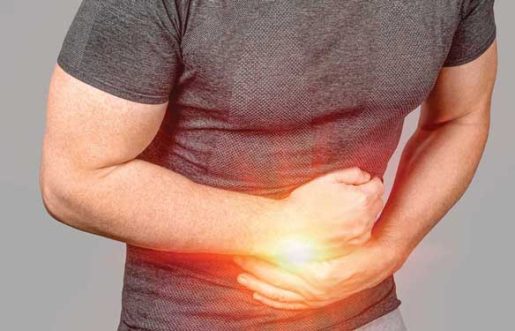 Over a third of abdominal pain visits in the ER are discharged without a known cause. How can doctors send a patient home without revealing the specific cause of a patient’s abdominal pain, you may be wondering? The truth is that docs are trained to search for “red flags,” or more serious features of symptoms. And once those are ruled out in the ER, the patient is deemed safe enough to go home for outpatient follow-up with their primary doctor in search of less worrisome root causes.
So let’s say it’s 2:00 a.m. and you wake up with abdominal pain, or perhaps it is your child who wakes you up with a stomachache. What are these red flags? When should you worry?
I’ll try to give you some loose guidelines as to when a symptom is worrisome, and when it is okay to wait. This may be a Peyk issue you may want to keep on your shelf for future reference. Let me emphasize, however, that this is general guidance that doesn’t apply to all circumstances. It is far better to be seen for a problem that ends up not being serious than to sit at home with a potentially serious condition.
Anatomy of the Abdomen
Before we decide how serious abdominal pain is, we need to understand the basic anatomy and the typical conditions that can cause pain in various sites of the abdomen. The abdomen is divided up into 4 sections referred to as “quadrants.” The location of the pain can often help in determining what the culprit is, and hence, whether it is worrisome or not.
You can follow along using this online diagram: https://medlineplus.gov/ency/imagepages/19578.htm
Here are the main quadrants:
• Upper right quadrant: (This refers to your right) It contains the liver and gallbladder, which sit right beneath the rib cage. The large intestine (aka colon) also shares a little space here.
• Upper left quadrant: This contains part of the true stomach and the spleen. The colon spends time here, as well.
• Upper middle section (“epigastric”): Between the above 2 quadrants, in the middle of the abdomen above the belly button, is a section known as the epigastrium. This is an important site because it contains the majority of the stomach and pancreas, along with a segment of the small intestine—all of which can cause pain.
• Right lower quadrant: This quadrant contains more colon, the last part of the small intestine, and the appendix. In women, one of the ovaries is located in/near this section.
• Lower left quadrant: The other ovary lives in the left lower quadrant, along with the colon that ends in the rectum where stool and gas are finally released.
What Causes Abdominal Pain?
There are a few more common troublemakers in the abdomen. I’ll give you the list of the “abdomen’s most wanted,” and where they tend to hang out.
The appendix: This is a small tube that can become infected and cause a dangerous problem. Appendicitis is a pain that usually begins around the belly button, but then settles in the right lower quadrant. Pain is often very severe.
The gallbladder: This organ is a sack that collects a digestive juice called bile that breaks down the fatty foods we ingest. It can form gallstones and get infected if the stone gets stuck while trying to escape into the connecting bile duct. It usually causes severe pain in the right upper quadrant, and less often so in the epigastric region (middle upper). Female patients often compare the severity of pain akin to childbirth—it’s often that bad.
The stomach and first part of the small intestine: Inflammation of the stomach lining called “gastritis,” and its progression to more severe stomach ulcers, can cause pain, bleeding, and occasionally a life-threatening perforation, leaking stomach acid into the abdominal cavity. Gastritis and ulcers commonly cause pain in the epigastric region. Pain can range from mild to severe. Many (but not all) patients report accompanying acid reflux and/or heartburn as well.
The pancreas: This organ releases strong digestive juices and also produces insulin. Excessive alcohol intake or gallstones stuck in the neighboring biliary ducts can cause “pancreatitis,” or inflammation of the pancreas that causes severe pain in the epigastric region. It is a severe pain which causes many patients to land in the hospital, however, it is not nearly as common as gastritis/heartburn/acid reflux as a cause of epigastric pain.
The colon: Pain in the colon can occur at nearly any site in the abdomen, but is most often in the left lower quadrant. The most common causes of pain in the colon by far are due to constipation and gas. However, one of the most serious colon conditions is called diverticulitis, an infection of the tiny pouches that line the inside of the colon. Also, various types of colitis (a general term referring to inflammation of the colon lining) can also cause colon pain—examples include the hereditary Crohn’s and Ulcerative Colitis, or infection due to a virus or, less commonly, bacteria.
When Should You Worry About Abdominal Pain?
Location is important, but the nature of the pain itself is even more so. Here are some of the things that make stomach pain more worrisome:
• Severity: Pain that wakes you up from sleep or stops you in your tracks is always worth worrying about.
• Persistence: Pain that is chronic or recurrent is generally more worrisome than a brief episode of mild pain that is self-resolving.
• Tenderness: Doctors use the term tenderness to signify pain that results when pressure is manually applied to that part of the body. From a patient’s perspective, tenderness could also be when movement makes the pain worse. People with appendicitis, for instance, don’t want to move or be touched.
• Loss of appetite: When a serious problem happens in the abdomen, the digestive tract slows down, and nausea and/or diminished appetite can occur. It’s rare for someone with appendicitis, for example, to want to eat. Significant unintentional weight loss as a result of an appetite slump is also especially worrisome.
• Vomiting: The extreme of a digestive shut-down can cause vomiting, which is why vomiting can sometimes be cause for concern. Vomiting blood especially is almost always an emergent issue.
• Blood in stool: Mild occasional painless rectal bleeding is most often due to hemorrhoids, which are annoying but not necessarily concerning. However, rectal bleeding does warrant a doctor’s evaluation to be sure of a benign cause, because more serious conditions could also cause blood in the stool. But bleeding along with abdominal pain is a more emergent concern.
• Melena: The word melena refers to black, tarry stool—think charcoal. That could be a sign of bleeding from the upper gastrointestinal tract, like the stomach. Bleeding in the stomach turns black by the time it exits the rectum. If something is causing enough bleeding to cause melena, it is usually something more serious, like a bleeding ulcer. This requires an urgent/emergent evaluation, even if there is no associated pain.
• Change in caliber of stool: Constipation can do this. However, obstruction such as with a tumor or mass in the colon can do so as well (although it’s less common). It’s always worth seeing your doctor for any changes in the caliber of the stool, such as “skinny stools” or “little bits” of stooling or simply the inability to have any stool at all.
It’s also vital to point out that certain patient populations are considered higher risk and may present more atypically when it comes to abdominal pain—those who are immune compromised, women (due to a more complex female anatomy), and the elderly. There is a particularly higher mortality and complication risk in the over 65 population, who often report more vague and non-specific symptoms that can worsen their prognosis. So these populations should have a much lower threshold to seek medical care for abdominal pain.
When Don’t You Need to Worry About Abdominal Pain?
The more reassuring signs on the flip-side are:
• Mild severity in a discomfort that is self-resolving and short-lived
• Pain that isn’t worse with pressing or movement
• Pain isn’t associated with a lack of appetite, nausea, or vomiting
• Pain doesn’t interfere with regular activity
• No associated unintentional weight loss
Furthermore, the passage of normal stool and gas shows that the digestive tract is working, which is also reassuring. That’s why surgeons ask people if they are passing gas after they perform surgery.
Generally, the top causes of less worrisome abdominal pain are:
• Constipation
• Gas
• Viral gastroenteritis (such as the “stomach flu”)—as long as it does not cause dehydration
• Irritable Bowel Syndrome (IBS)
• Benign, tolerable medication side effects (such as mild diarrhea or constipation)
• Infrequent acid reflux or heartburn—while if infrequent it is often benign (let’s say after consuming spicy chicken at an Indian restaurant one day), more frequent or severe symptoms should not be ignored
The bottom line, of course, is that it is always better to get checked out by a doctor than to stay at home with something potentially more serious. Abdominal pain can be complex, and the experience and knowledge of your doctor is well worth the effort.
Let me once again remind you that this article is for informational purposes only. My goal is to add to your medical knowledge and translate some of the complex medical jargon you hear, so that when you do go to your doctor, your visits will be more fruitful. I don’t intend to replace your doctor; he or she is the one you should always consult about your own medical condition.
Sanaz Majd, MD, is a board-certified Family Medicine physician and host of the Majd MD YouTube channel, reviewing the most popular medical topics: www.youtube.com/MajdMD. You can also follow her on Facebook or Instagram: @SMajdMD.