

The Mind Behind the Music
By Vahid Jahandari

Introduction
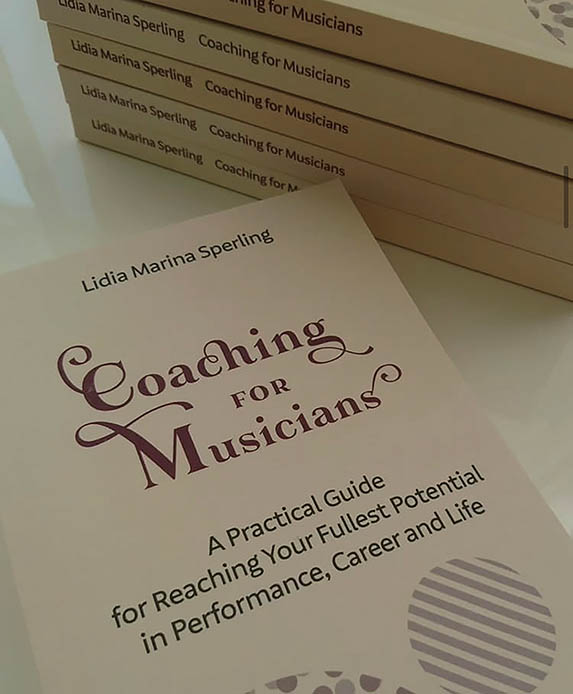
As an educator and scholar, my work has increasingly focused on children’s pedagogy while drawing on my many years of experience as a graduate teaching assistant. Interested in the psychological aspects of performance, I contacted Lidia Marina Sperling, an established musician and coach based in Bern, Switzerland, who generously shared a copy of her 2019 book, Coaching for Musicians: A Practical Guide for Reaching Your Fullest Potential in Performance, Career and Life.*
Inspired by her own journey, Sperling sought to help others overcome the challenges associated with performance and career development. The book addresses topics including anxiety, self-confidence, fear of mistakes, motivation, relaxation, burnout, perfectionism, focus, and overcoming creative blocks, offering practical strategies for musicians at every stage of their musicianship. This essay provides an overview of the book’s key themes, reflecting on them while incorporating additional insights into the most critical aspects.
Chapter I: Performance Anxiety
In the first chapter, Sperling explores one of the most common challenges faced by musicians. She emphasizes that performing at one’s highest level in high-stakes situations, such as concerts or auditions, is not determined solely by preparation and technical ability. Emotional and mental factors also shape performance outcomes.
Sperling examines anxiety as a process occurring before, during, and after performance. Before performing, musicians may experience increasing pressure, fear of insufficient preparation, and worries about mistakes, failure, or judgment. These concerns can lead to excessive practice or difficulty concentrating, accompanied by symptoms such as insomnia, irritability, and tension. During performance, anxiety often peaks, resulting in negative thoughts, fear of memory lapses, lack of concentration, trembling, rapid breathing, muscle tension, and increased heart rate.
Sperling argues that emotions should not be eliminated but understood and redirected to support better performance. She highlights post-performance anxiety, where musicians focus on mistakes despite positive feedback. Through breathing techniques, mental preparation, and greater self-awareness, musicians can manage anxiety and strengthen confidence and expression.
Emotions into Expression
Having worked with renowned performers internationally, I have observed that anxiety affects even the most accomplished musicians. Through watching artists before and after concerts, I have found that success does not come from eliminating anxiety, but from learning to manage and channel it.
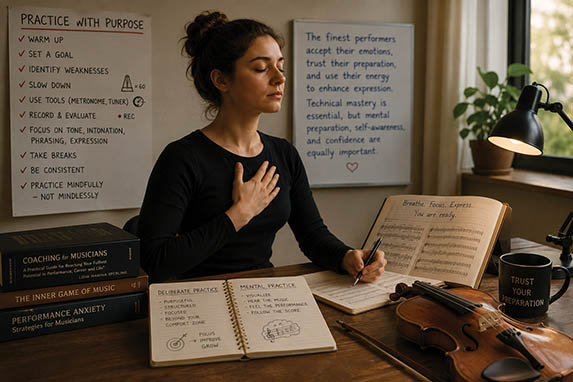
The finest performers accept their emotions, trust their preparation, and use their energy to enhance expression. Technical mastery is essential, but mental preparation, self-awareness, and confidence are equally important. I have seen that artists who develop these skills are better able to remain focused and communicate deeply with their audiences. In my experience, anxiety can become a source of creativity when approached with awareness.
Many students have shared their struggles with unwanted thoughts before performances, such as fear of mistakes, self-doubt, or concern about expectations. In my guidance, I emphasize the importance of identifying these thoughts and replacing them with constructive inner dialogue. I encourage students to trust their preparation and view emotions as a source of energy rather than a limitation.
Chapter II: Technical Preparation
As Sperling explains in the second chapter, technical preparation is the foundation of confident performance. While mindset shapes how you perform under pressure, technique determines what you are capable of delivering. There is no shortcut to consistent, focused practice. Every successful musician has spent countless hours refining the fundamentals before stepping onto the stage.
However, not all practice is equally effective. Many musicians spend long hours repeating familiar passages without making meaningful progress. Improvement comes from deliberate practice—a method of working with full concentration, identifying weaknesses, and systematically correcting them. Instead of simply playing through a piece, deliberate practice requires slowing down, solving technical problems, and challenging yourself just beyond your current abilities.
Studies show that elite musicians are distinguished less by the total number of hours they practice than by the quality and structure of those hours. Rather than practicing for extended periods without purpose, they organize their work into focused sessions with regular breaks, allowing them to maintain concentration, avoid mental fatigue, and maximize improvement. This structured approach also helps reduce unproductive rumination—the tendency to overthink unpleasant experiences from the past and to anticipate similar obstacles in the future—which can interfere with effective practice.
Practice With Purpose
Deliberate practice is purposeful, structured, and highly focused. Rather than repeating familiar passages, it involves identifying weaknesses and working systematically to improve them. Effective practice includes warming up, using tools such as a metronome or tuner, slowing difficult passages, recording and evaluating your playing, and maintaining an objective, critical mindset. Attention should also be given to posture, tone, phrasing, intonation, and expression—not just technical accuracy. Consistency, regular breaks, and avoiding mindless repetition are equally important.
Although demanding, deliberate practice becomes increasingly natural and leads to lasting improvement. Mental practice further strengthens learning by rehearsing music away from the instrument through detailed visualization of notes, phrasing, dynamics, and technique. Following the score while listening also deepens understanding and highlights areas for improvement. Memorization should begin early and proceed section by section. Combining muscle, auditory, visual, and analytical memory creates a stronger, more reliable recall, increasing confidence and helping musicians recover smoothly from occasional memory lapses.
Chapter IV: Relaxation Techniques
According to Sperling in the fourth chapter, performance anxiety affects both the mind and the body. Even well-prepared musicians may experience tense muscles, shallow breathing, trembling hands, or difficulty concentrating before stepping onto the stage. These reactions are natural responses to stress, but they do not have to determine the quality of a performance. Learning to relax is therefore an essential part of preparation.
One of the most effective techniques is deep diaphragmatic breathing. Under pressure, breathing often becomes rapid and shallow, increasing tension and reducing concentration. Slow, controlled breathing helps restore a healthy rhythm, calm the nervous system, and reduce symptoms such as muscle tightness and racing thoughts. Visualization is another valuable strategy. By mentally rehearsing a successful performance, musicians strengthen concentration, reinforce memory, and become more familiar with emotions they may experience on stage. This makes the actual performance feel more familiar and manageable.
Finding Inner Calm
Meditation is an effective technique for reducing stress, improving concentration, and increasing emotional awareness. By focusing on the breath or a positive affirmation, musicians can calm racing thoughts, remain present, and approach performances with greater confidence. Even a few minutes of daily meditation can reduce tension and performance anxiety. Other mind-body practices, including yoga and tai chi, support relaxation by combining controlled breathing, movement, and mindfulness. Practiced regularly, these techniques improve flexibility, balance, focus, and resilience, helping musicians manage stress on and off the stage.
Chapter VI: Creative Blocks
In the sixth chapter, Sperling highlights how creative blocks are a common challenge for musicians, often resulting from prolonged stress, injury, exhaustion, burnout, or unhealthy working environments. They may also be intensified by exploitative individuals and circumstances that discourage growth or take advantage of vulnerability for personal and collective gain at the expense of others. Unfortunately, such behavior can occur across educational settings, from highly competitive graduate programs and conservatories to below-average schools and elementary-level institutions. Left unaddressed, these obstacles can diminish motivation, reduce quality, and even make one question their path. Recognizing these challenges early, establishing healthy boundaries, and seeking supportive mentors and colleagues are essential for protecting well-being and artistic development.
One of the most preventable causes of creative blocks is physical injury. Maintaining proper posture, taking regular breaks, and gradually increasing practice intensity help reduce the risk of overuse injuries. At the first signs of persistent pain, musicians should stop playing and follow a structured recovery plan before returning to full practice.
Exhaustion and burnout require equal attention. Persistent fatigue, poor concentration, and declining performance are signals that physical and emotional resources have been depleted. Recovery often involves reducing workload, setting realistic goals, prioritizing rest, maintaining healthy habits, and incorporating mental practice when physical practice is limited. Relaxation techniques, hobbies, physical activity, daily exercise, and support from healthcare professionals can also accelerate recovery.
Toxic Work Environments
Hostile work environments deserve particular attention because their effects often extend far beyond temporary creative stagnation. Prolonged exposure to manipulation, harassment, or exploitative power dynamics can lead to distress, emotional exhaustion, diminished self-confidence, and lasting career setbacks. Those in positions of authority have a responsibility to foster respectful and safe environments while addressing harmful behavior. Musicians must recognize when an environment is incompatible with their qualifications, aspirations, well-being and long-term goals. Distancing themselves and, when necessary, severing ties completely are essential steps toward protecting their health, reputation, and future career while restoring confidence and creative purpose.
In some cases, exploitative behavior does not remain isolated but escalates over time, particularly when individuals misuse positions of authority or influence to preserve control, suppress dissent, or protect their own interests. Tactics may include intimidation, retaliation, social exclusion, restricting access to opportunities or resources, damaging reputation in the workplace and beyond, or manipulating institutional processes to discourage reporting or resistance. Such patterns can have profound consequences, making early recognition essential. Musicians should remain vigilant, establish firm boundaries, document and report inappropriate conduct, and seek guidance through trusted mentors or appropriate institutional channels. When meaningful change is unlikely, distancing oneself and severing ties may be the most effective means of safeguarding one’s well-being, integrity, and career.
Concluding Reflections
The book concludes with the seventh chapter, Career Opportunities, where Sperling shifts the focus from artistic and psychological development to the practical realities of building a sustainable career in music. She emphasizes that success depends not only on talent and hard work but also on creativity, adaptability, entrepreneurship, and the willingness to actively promote oneself. I found this chapter to be a fitting conclusion, since it reinforces the idea that musicians must take ownership of their trajectory by developing a clear action plan, cultivating meaningful relationships, and establishing a strong public presence.
One other important lesson is that success also depends on recognizing and managing unhealthy workplace dynamics before they undermine well-being and performance. Understanding why conflicts arise, identifying destructive behaviors, communicating assertively, and applying effective conflict-resolution strategies enable musicians to respond constructively rather than react emotionally. Equally essential are establishing clear boundaries, seeking appropriate support, and recognizing when to disengage. These skills strengthen resilience, professionalism, healthy collaboration, and long-term sustainability.
Individuals who habitually engage in hostility, abuse of power, or aggression may harm themselves more than their intended targets, aside from the chaos they cause within environments and hierarchical structures. Such persistent patterns often reflect underlying psychological dysfunction and can become self-perpetuating rather than realistically fulfilling. Chronic antagonistic behavior is associated with heightened stress responses, physiological deterioration, poorer performance, and impaired relationships, reinforcing patterns that become increasingly difficult to break without sustained clinical intervention. In our final exchange regarding this essay, Sperling concluded with a simple yet meaningful reminder: “Let’s try to use the power and knowledge we have in helping others live a journey full of joy and fulfillment.”
* Sperling, Lidia Marina, Coaching for Musicians: A Practical Guide for Reaching Your Fullest Potential in Performance, Career and Life, Independently Published (2019).