The Dangerous Side of Online Weight-Loss Drugs:
What Patients Need to Know Before Buying GLP-1 Medications
By Sanaz Majd, MD
GLP-1 medications, drugs such as semaglutide and tirzepatide, have become some of the most talked about treatments in medicine. When prescribed and monitored properly, they help many people with diabetes and obesity lose significant weight and lower their risk of serious disease. But their popularity has created a booming online market of websites, social media sellers, and “pharmacies” offering these drugs quickly, cheaply, and often without a real prescription. That shortcut can be dangerous. Here is what you should know before you click “Add to Cart.”
The Problem with Buying Online
The appeal is real: lower prices, no doctor’s visit, and discreet delivery to your door. But the product that arrives may be nothing like the brand name medicine you think you are getting.
When researchers actually purchased semaglutide from online sellers that did not require a prescription, the findings were alarming. Many sellers never delivered the product at all after taking payment. Of the vials that were tested in the laboratory, some were contaminated with bacterial toxins (endotoxins), and the actual amount of real drug was far below what was advertised; in some cases only a small fraction of the labeled strength. In other words, people were paying for a product that was impure, under-dosed, and potentially unsafe to inject.
Counterfeits Can Contain the Wrong Drug
Fake versions of these medications have entered the supply chain worldwide. The World Health Organization (WHO) has warned about counterfeit Ozempic, and some seized fake samples were found to contain insulin instead of semaglutide. Injecting insulin when you don’t need it can cause blood sugar to crash dangerously low, a life-threatening emergency. With a counterfeit product, you simply cannot know what is inside the pen or vial.
“Research Only” and Compounded Versions Carry Their Own Risks
Some websites sell semaglutide or tirzepatide labeled “for research purposes only” to get around the need for a prescription. These are not approved for human use and are not held to the same safety standards as prescription medicines.
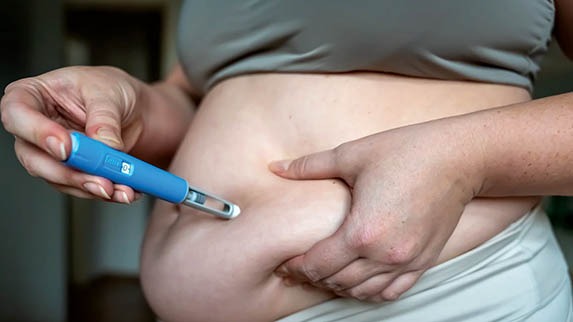
Compounded versions (custom mixed by certain pharmacies) have also surged in popularity during shortages. While some compounding is legitimate, a safety analysis of adverse event reports found that compounded GLP-1 products were linked to problems including dosing errors and hospitalizations. A common and serious danger is dosing: these products often come in vials that require you to measure and draw up your own dose, and mistakes can lead to severe overdoses.
Skipping the Doctor Means Skipping Important Safety Checks
Perhaps the biggest hidden danger of buying online is not just the product, but the absence of a medical team. Direct-to-consumer platforms can ship these drugs with little real evaluation. A proper assessment before starting a GLP-1 medication matters because these drugs are not right for everyone.
Before prescribing, your physician checks for conditions that make these drugs unsafe, for example, a personal or family history of a certain thyroid cancer (medullary thyroid carcinoma) or a rare genetic syndrome called MEN2, which are reasons to avoid them. They also screen for other risk factors, such as a history of pancreatitis, gallbladder disease, and eating disorders, and they review your other medications to ensure no interactions exist. People with contraindications to taking these drugs can obtain them online with no safeguards at all, a particular concern.
Real Side Effects Need Real Monitoring
Even genuine medications can cause side effects. The most common are gastrointestinal: nausea, vomiting, diarrhea, and constipation. We have ways to combat these side effects. Less commonly, GLP-1 drugs have been associated with gallbladder disease, pancreatitis, and dehydration that can affect the kidneys. The dose is meant to be increased slowly over weeks to reduce these effects, something that is hard to manage safely on your own with an unlabeled product.
These medicines also cause loss of muscle along with fat, so nutrition and protein intake matter during treatment. This is the kind of guidance a care team provides and an anonymous website does not.
Protect Yourself: Practical Advice
None of this means GLP-1 medications are bad. For the right person, prescribed and followed by a qualified physician, they are genuinely effective and can improve health. The danger lies in how and where you obtain them, not in the legitimate treatment itself.
• Get a real evaluation: See a licensed clinician who reviews your history, explains the risks, and follows up with you.
• Use a licensed pharmacy: Fill prescriptions only through a verified, licensed pharmacy, not a social media seller or an overseas website.
• Be suspicious of bargains: Prices far below normal, “no prescription needed,” and “research only” labels are red flags.
• Never guess your dose: If a product requires you to measure your own injection, that may be a setup for dangerous errors without physician guidance.
• Watch for warning signs: Severe abdominal pain, persistent vomiting, signs of low blood sugar (shakiness, confusion, sweating), or a rapid heartbeat warrant urgent medical attention.
• When in doubt, ask: A pharmacist or physician can help you tell a legitimate product and source from a dangerous one.
The desire to lose weight and feel healthier is completely understandable. But the safest path to the benefits of these medications runs through a trusted physician and a legitimate pharmacy, not through a checkout cart on an unknown website.
REFERENCES
• Ashraf AR, Mackey TK, Vida RG, et al. “Multifactor Quality and Safety Analysis of Semaglutide Products Sold by Online Sellers Without a Prescription.” Journal of Medical Internet Research, 2024.
• Ruder K. “WHO Warns of Counterfeit Ozempic in the Global Supply Chain—Here’s What to Know.” JAMA, 2024.
• McCall KL, Mastro Dwyer KA, Casey RT, et al. “Safety Analysis of Compounded GLP-1 Receptor Agonists: A Pharmacovigilance Study Using the FDA Adverse Event Reporting System.” Expert Opinion on Drug Safety, 2026.
• Golovaty I, Hagan S. “Direct-to-Consumer Platforms for New Antiobesity Medications — Concerns and Potential Opportunities.” New England Journal of Medicine, 2024.
• Kunutsor SK, Seidu S. “Safety and Tolerability of Glucagon-Like Peptide-1 Receptor Agonists: A State-of-the-Art Narrative Review.” Drugs, 2026.
Disclaimer
This article is for general education only and is not medical advice, nor a substitute for care from your own physician. Reading it does not create a doctor–patient relationship. Speak with your own physician about any questions regarding your health, medications, and/or treatment.
Sanaz Majd, MD, is a practicing, board-certified Family Medicine physician and host of the @MajdMD YouTube channel, reviewing common medical conditions and topics. You can also follow her on Facebook or Instagram: @SMajdMD.