
The Impact of the New Supreme Court Ruling on the 1965 Voting Rights Act on our Community
By Hooshyar Afsar
Introduction
On April 29 this year, the Supreme Court of the United States (SCOTUS) issued a ruling that has already had far reaching consequences on the Congressional districts of mainly Southern states. Officially known as Louisiana v. Callais, the ruling invalidated the 1982 Amendment of the 1965 Voting Rights Act (VRA) which created “majority-minority” districts. In this article, I will discuss this ruling and how it could impact our community and other immigrant communities.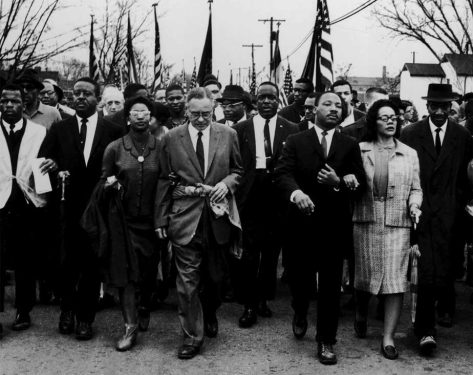
Historical Background
The 1965 VRA was a landmark legislation that legally put an end to Jim Crow segregation in the United States. It was a major accomplishment of the decades-long Civil Rights movement that completed what was achieved by the 1964 Civil Rights Act, which declared racial segregation unconstitutional. The VRA provisions were supposed to expire in 1982, but were revived and amended in that year with a new provision that created what is known as “majority-minority” Congressional districts. To understand the reason for that amendment, we need to take a look at the history of the right to elect and being elected in the South.
Prior to the 1965 VRA, all Southern states, beginning with Mississippi in 1890, had statewide provisions in their constitutions that eliminated the right to vote for Black Americans using racial segregation and making it practically impossible for Black Americans to register and vote in those states. The 1965 VRA ushered in a huge increase in Black voter registration in all Southern states and, for the first time since the Reconstruction (the twelve year period after the end of American Civil War in 1865), gave Black Americans the true right to elect. Many historians argue that the U.S. was not a real democracy before the 1965 VRA. The historic change was not limited to Black Americans and resulted in higher voter registration of Hispanics, Native Americans, and all immigrant communities (first generation naturalized citizens), including Iranian Americans.
While the 1965 VRA ushered in a new era with hundreds of Black Americans being elected to local and statewide offices, it did not resolve the issue of Black representation in the U.S. Congress. In fact, in 1975, ten years after the passage of the VRA, the number of Black Americans in the U.S. Congress stood at 17 with all of them being elected to the House of Representatives with no senators. This was about 3% of the total members of Congress with a major underrepresentation of Black Americans who stood at 13% of the population. In 1982, the VRA was amended to address this issue by creating what has been known as “majority-minority” Congressional districts. What were those districts?
The idea was that such districts would provide Blacks with a proportional representation in Congress by creating Black majority congressional districts. This amendment significantly increased the number of Black members of Congress such that by 1995, utilizing the 1990 Census, there were 43 Black members of Congress, including one senator from Illinois. This number has increased to 66 in the current Congress, including 5 senators. For the first time in U.S. history, Black Americans have overall Congressional representation equal to their proportion of the U.S. population. Yet, the 1982 amendment has also had unintended consequences.
Unintended Consequences
While creation of “majority-minority” districts has contributed to a significant increase in Congressional representation for Black Americans, this process has diluted the representation for the Democratic party in the other Congressional districts in the Southern states. In fact, the Republicans in the South supported this approach for the exact same reason. This dilution has had a direct negative impact on Democrats ability to win in the other Congressional districts because of the decrease of their constituency. Republicans unsurprisingly supported this idea to push out many traditional Democrats from the other Southern states’ Congressional districts and thereby dominate the Southern Congressional representation.
This is obviously a dilemma whenever there are acts of “social engineering” to promote racial justice. There are unintended consequences. In spite of the benefits, there are setbacks. Yet, many in the Black community readily accepted the cost.
Now the question is what kind of unintended consequences will the recent SCOTUS ruling have. It is clear that in the short run, Republicans will gain seats in the Southern states by redrawing the Congressional districts (gerrymandering). This process has already started in Louisiana and other Southern states are expected to follow. How about the long run? Will Democrats, including candidates of color, have a chance to win in the gerrymandered Congressional districts in the South? Will the “reverse migration” movement encouraging a Black migration back to the Southern states have an impact on that process? Only time will tell.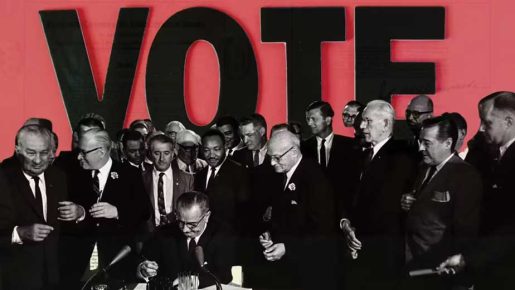
The Ruling
Louisiana v. Callais was not the first severe blow to the VRA. The first one happened in 2013 in the Shelby County v. Holder ruling when SCOTUS declared that the country had changed and the preclearance provision of the VRA that required Southern states to first clear any changes to voter registration with the U.S. Justice Department was no longer needed.
Preclearance was a strong measure that stopped Southern states from making changes to the voter registration process to curtail and reduce Black people from registering and voting in elections. Up until that point, all the previous federal legislation that checked such efforts after the fact were ineffective because they were in a no-win race with the racist attempts to practically eliminate any chance for Black people to register and vote in the South. Prior to the 1965 VRA, every time a discriminatory provision was shot down by the DOJ, Southern states quickly put another one in place. The VRA preclearance provision stopped such discriminatory practices, yet the 2013 Supreme Court ruling brought them back. Research by the Brennan Center for Justice shows that since that ruling, multiple discriminatory practices have become commonplace in the South, including kicking voters off voting rolls, voter ID requirements and restrictions on mail voting, and a “significant increase in voter the ‘racial turnout gap,’” especially in city and county elections that don’t get the media attention of Congressional ones. [1] All of this obviously impacts communities of color disproportionately. Most people don’t realize that, for many poor communities of color in the South, getting an ID is a big burden since they have to travel to a DMV office and pay a fee while many of them don’t have a car. On top of that, some Southern states such as Georgia have closed many DMV offices to make it even more difficult. [2]
It is against this backdrop that the SCOTUS took on Louisiana v. Callais, specifically addressing Section 2 of the VRA requiring “majority-minority” districts along racial lines. In a 6-3 opinion written by Justice Samuel Alito, the Court deemed the provision “racial gerrymandering” and added new requirements for proving intent of any racially discriminatory practices regarding changes to the Congressional voting districts. Similar to the 2013 ruling, Alito argued that “things have changed dramatically” in the South since the passage of VRA, and “Black voters now participate in elections at similar rates as the rest of the electorate.” [3] In the dissenting opinion, Justice Elena Kagan wrote that: “The consequences [of the Court’s decision] are likely to be far-reaching and grave. Today’s decision renders Section 2 all but a dead letter.” [3] Justice Kagan also wrote that with the intent-based standard proving “vote dilution” in the relevant future legislations will become unwinnable.
It is important to address two tactics that have been used to turn back the 1965 VRA and other civil rights and racial justice cases. One is the “intent-based” standard for discrimination. With many SCOTUS rulings in the past few decades used as precedent, moving forward on racial discrimination cases have become almost impossible. That is why there is a movement to shift intent-based standards to outcome-based ones in the future. What this means is to look at the outcome of certain rulings as the main measure on whether the court decision was discriminatory. The developments after the 2013 Shelby County v. Holder ruling mentioned earlier could then be used to show an increase in discrimination.
The second tactic is the notion of “colorblindness” that is used to justify both 2013 and 2026 rulings discussed here. The justices’ use of the “change for the better” language in racial discrimination cases reveals their position that it is now safe to be “colorblind.” A similar logic has also been used in the past that—as racism is bad and/or the notion of race doesn’t have any scientific basis—we need to be “colorblind.” At first view, such statements sound harmless yet they ignore the impact of hundreds of years of racial discrimination that has made deep social, economic, and political scars on all aspects of life in the U.S.
Impact on Our Community
The Louisiana vs. Callais decision will have far reaching consequences in the electoral maps of the South and balance of power in Congress. The New York Times estimates that up to 12 Congressional seats could shift from Democratic to “safe” Republican seats. [4] This decision is yet another blow to the cause of racial justice in the United States and turns back historical accomplishments of the Civil Rights movement.
The significance of this for our community and all immigrant communities should not be underestimated. Historically in the United States, causes of racial justice and immigration justice have moved forward or backward consistently together. It was not an accident that within months of the passage of the 1965 VRA, Congress passed the Immigration Act of 1965 that eliminated racial quotas in immigration and introduced family-related immigration and job-related paths to becoming legal immigrants and naturalized citizens. Those provisions were instrumental in the sizable growth of our community in the U.S. Standing up for our rights and unity with other immigrant communities and the racial justice movements to avert setbacks in immigrant rights is essential to a bright future for our community.
References
[1] – https://www.brennancenter.org/our-work/analysis-opinion/after-louisiana-v-callais-heres-proof-just-how-bad-voting-rights-america?ms=gad_voting%20rights%20act_807933094470_8628877148_196472032459&gad_source=1&gad_campaignid=8628877148&gbraid=0AAAAAC8kUVndMRhlTO3qaV_wHePOv2p6W&gclid=Cj0KCQjwrZTRBhDSARIsAHidYfdDFRvshfg4HL__tgjf1X27Nr5OgU1uJCDpMd5xSNQyMoH0TEAAQ7IaAnwHEALw_wcB#:~:text=Our%20research%20in,much%20media%20attention.
[2] – Anderson, Carol, One Person No Vote, Bloomsbury Publishing, (2018).
[3] – https://www.supremecourt.gov/opinions/25pdf/24-109_21o3.pdf
[4] – https://www.nytimes.com/2025/10/15/upshot/supreme-court-voting-rights-gerrymander.html